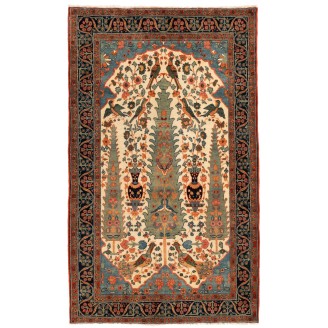
Kirman Prayer Rug
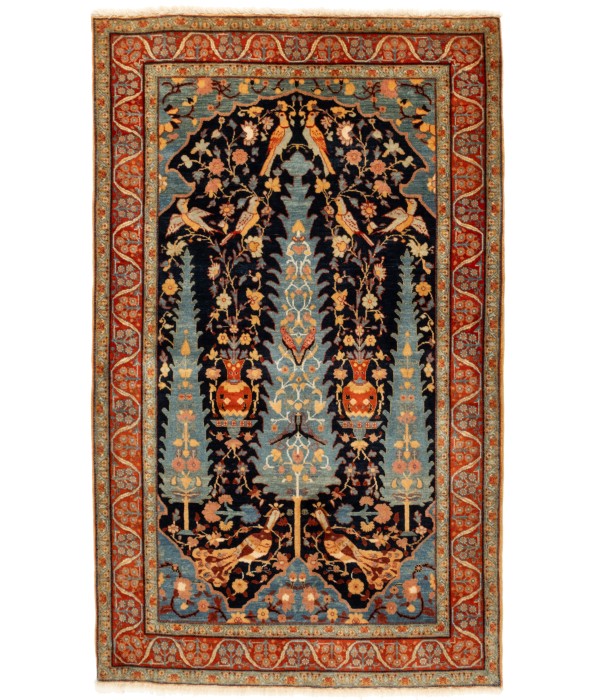


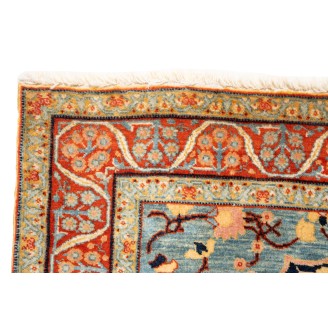
Persian Kerman Prayer Rug – Vase, Garden and Bird Motifs, 19th Century Inspiration
Origin and Inspiration
This carpet is inspired by a remarkable Persian prayer rug design preserved in the collection of The Metropolitan Museum of Art and historically documented through Sotheby’s catalogue publications.
Attributed to Northern Persia (Kerman region), the original piece dates to the late 19th century and reflects the continuation of Safavid artistic traditions into later workshop production.
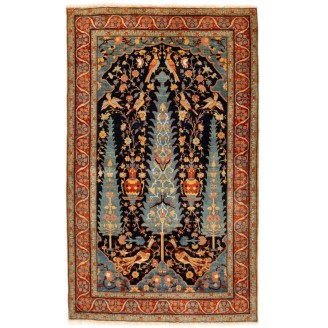
Prayer rugs of this type are defined by their mihrab (prayer niche)—a symbolic architectural form representing the direction of prayer.
A Garden of Symbolism:
Unlike earlier, more austere prayer rugs, Kerman examples of this period often transform the niche into a richly detailed garden scene, filled with life, color, and narrative elements.
Materials and Craftsmanship
This piece reflects the refined textile tradition of Persian workshop weaving.
✔ Materials:
Pile: Hand-spun wool, dyed with natural pigments
Foundation: Wool warp and weft for structural precision
✔ Weaving Technique:
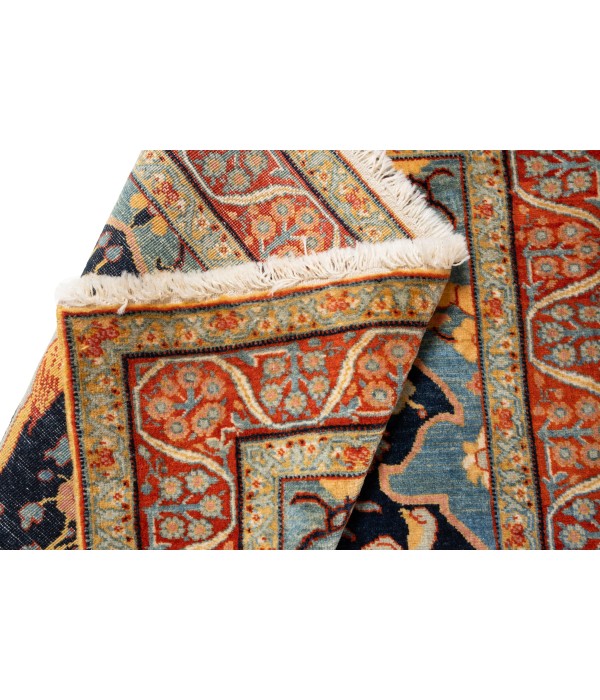
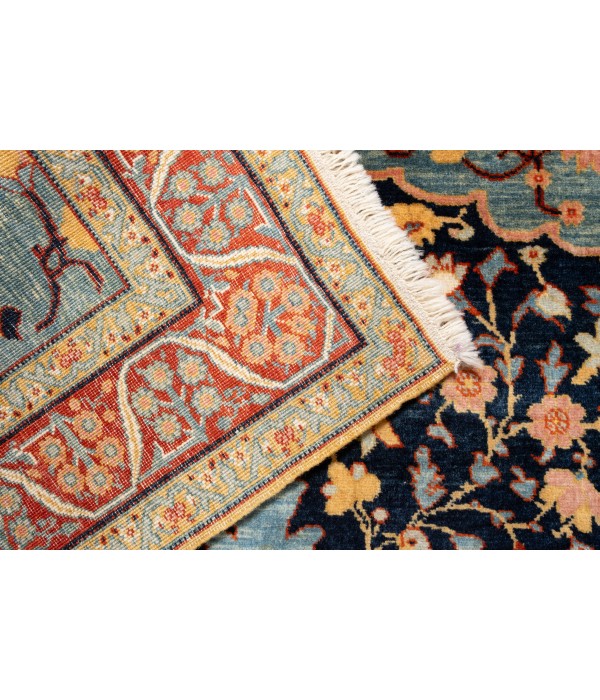
Hand-knotted using Persian (asymmetrical) knotting
Fine weave enabling detailed articulation of floral and figurative motifs
Low pile height, enhancing clarity of design
✔ Origin:
Handwoven following Persian workshop traditions
✔ Character:
Soft yet structured handle
Balanced between decorative richness and technical precision
Design and Pattern
The design presents a richly layered composition combining architectural structure with naturalistic and symbolic elements.
✔ Central Structure (Mihrab):
A clearly defined prayer niche (mihrab) forms the architectural framework
The shape resembles a vaulted arch, guiding the visual movement upward
✔ Vase Motif:
Two symmetrical vases anchor the lower field
From these vases emerge stylized trees and flowering plants
This motif symbolizes abundance, growth, and the idea of a spiritual garden
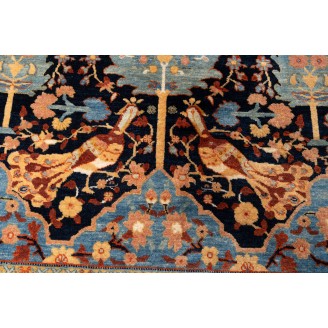
✔ Animal Elements:
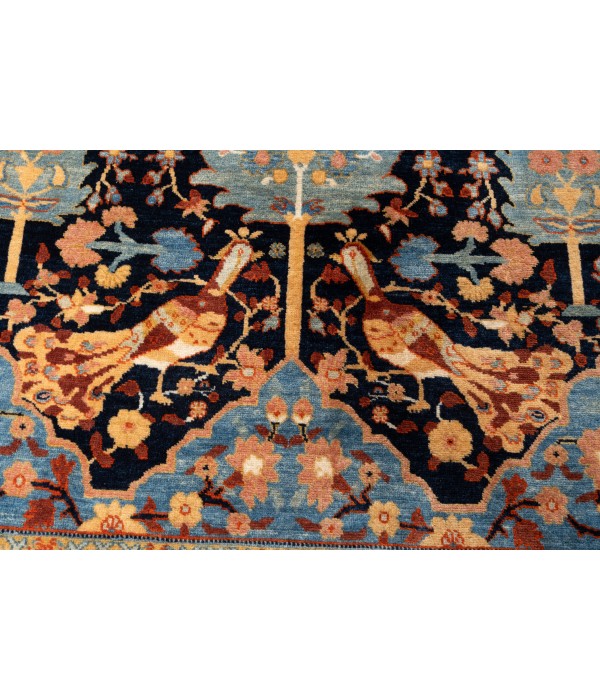
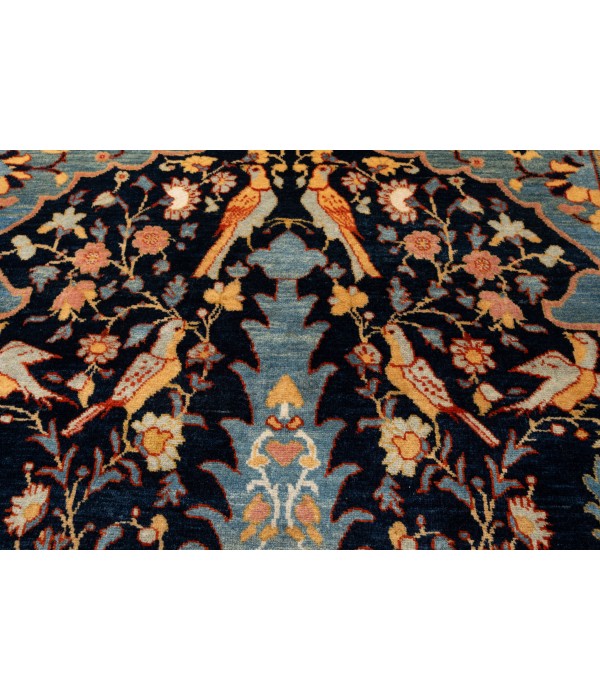
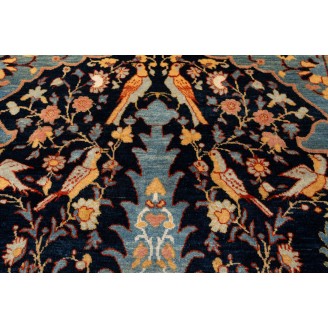
Birds are prominently integrated throughout the composition
Positioned within branches and floral elements, they animate the design
These figures reflect the Persian tradition of combining nature with poetic symbolism
✔ Field Composition:
The surface is filled with flowers, leaves, and scrolling vegetal forms
The design creates a sense of a paradise garden within the niche
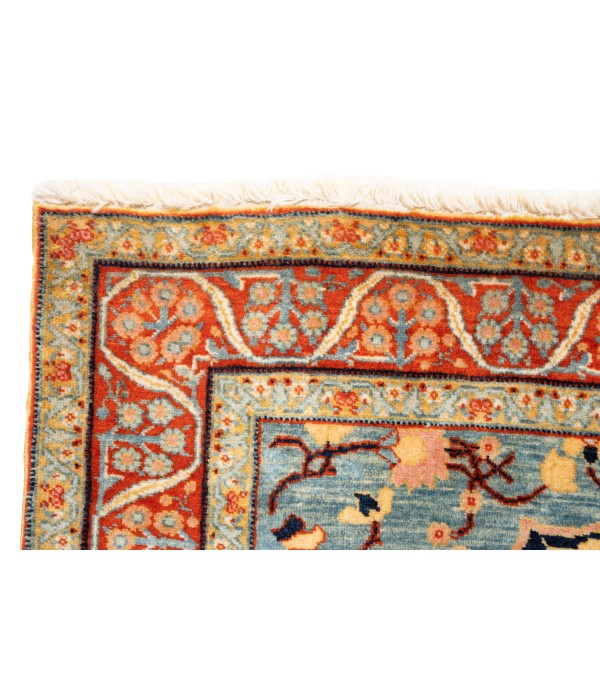
✔ Borders:
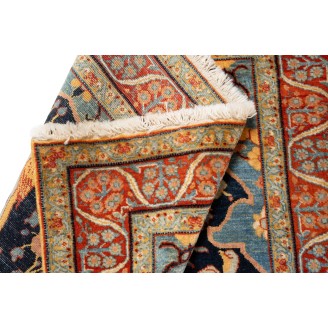
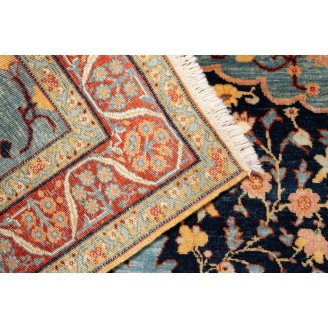
Richly decorated borders frame the composition
Floral and vine motifs echo the interior design, creating continuity
Color Palette and Dyes
The palette reflects the characteristic richness of Kerman carpets.
This rug boasts a harmonious blend of 10 natural colors, each derived from traditional dyeing methods: Natural Wool Color 320: Specially Washed Khaki 413: Dyers’s Weed Sunray Color 405: Henna Melancholy 122: Spurge - Madder Root Falu Red 416: Madder Root Dark Sienna 402: Madder Root - Pomegranate - Spurge - Walnut Hulls Emerald Green 407: Chamomile - indigo Turquoise 330: Spurge - Madder Root - Indigo - Walnut Hulls Cadet Blue 26: Spurge - Indigo Navy Blue 432: Indigo - Pomegranate
These colors work together to enhance both the narrative and architectural qualities of the design.
Summary
This Kerman prayer carpet represents a refined interpretation of a 19th century Persian design, where architectural form, natural imagery, and symbolic meaning come together in harmony.
Inspired by museum-held examples and documented auction pieces, it reflects a period in which traditional Safavid design language was reimagined with greater decorative freedom.
The combination of mihrab structure, vase composition, and bird motifs transforms the carpet into more than a functional object—it becomes a visual garden, rich in detail and meaning.
It is both a decorative textile and a narrative composition, offering depth, elegance, and historical resonance.
Dimensions:
3 ft 8 in x 6 ft 2 in ( 113cm x 189cm )