



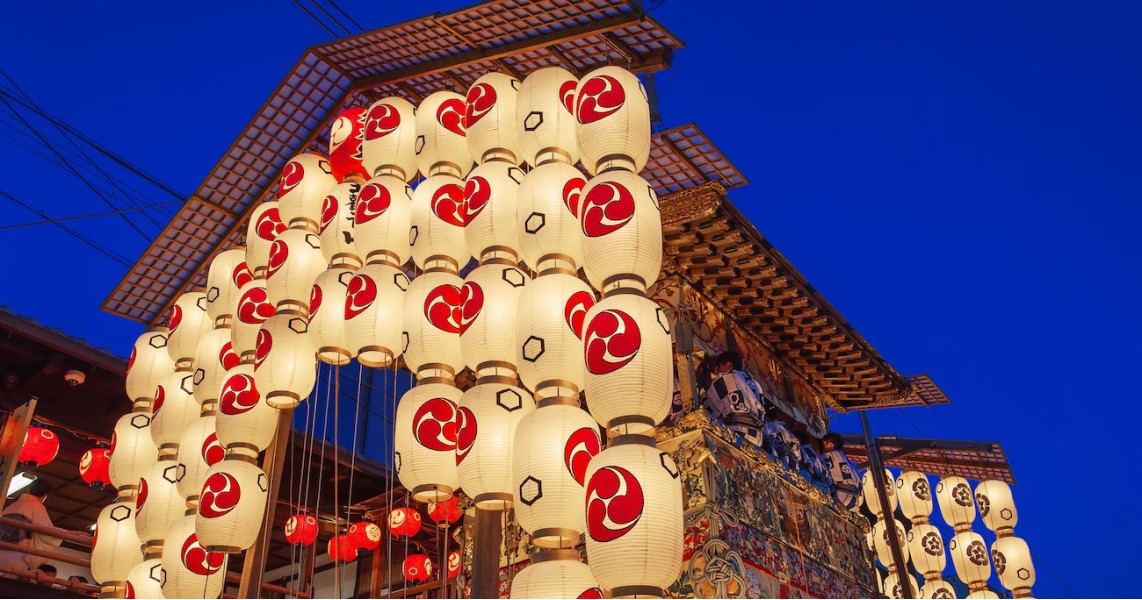
During Kyoto’s Gion Matsuri, some of Japan’s most important festival floats move through the city covered with historic textiles. At first glance, they appear as grand wooden structures decorated for celebration. But a closer look reveals something extraordinary: Persian carpets, Indian weavings, Turkish carpets, European tapestries, and other imported textiles are displayed as part of the floats.
These textiles are not casual decorations. They represent status, protection, cultural memory, and Japan’s long fascination with the wider world. For Ararat Rugs, this tradition offers a meaningful connection, as it demonstrates how rugs have been respected not only as floor coverings but also as cultural objects that carry history, function, and identity.
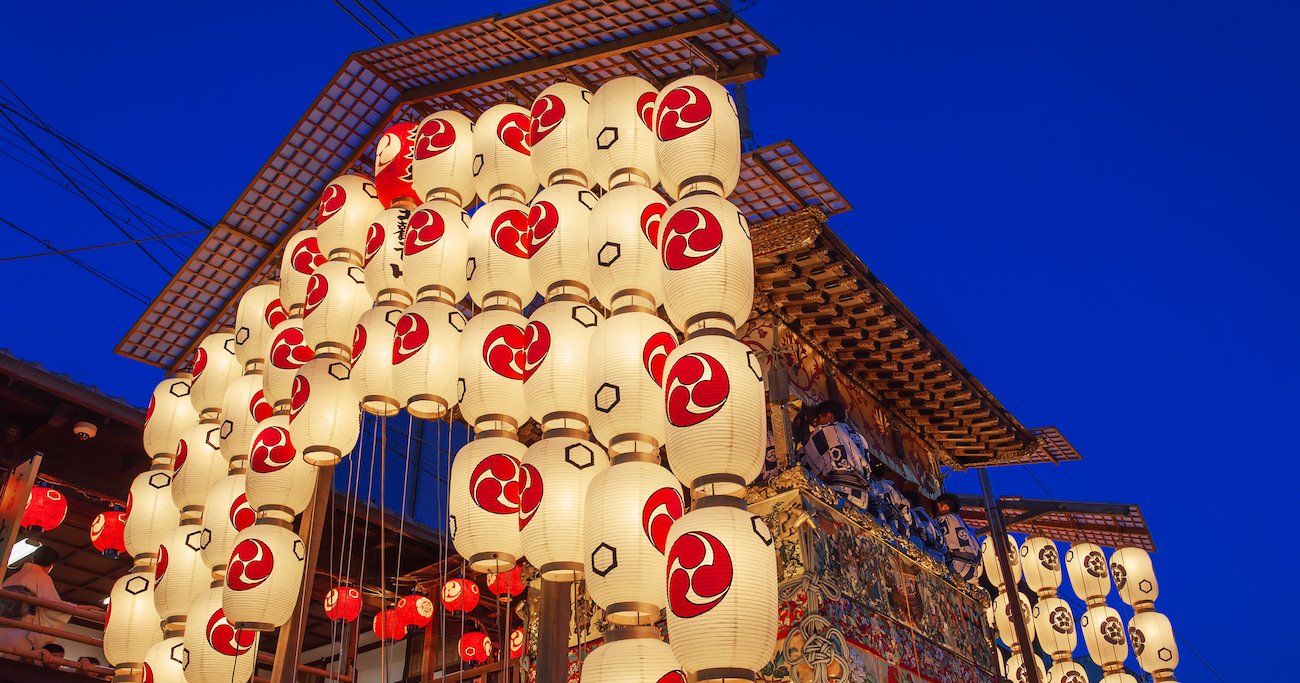
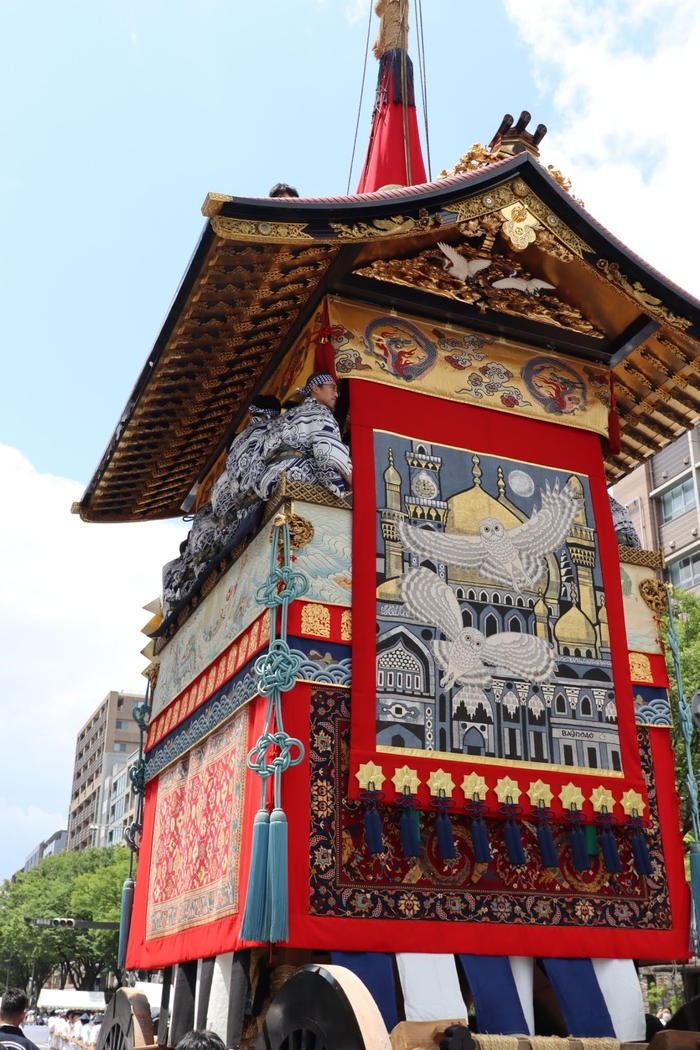
Photo: A Gion Matsuri yamaboko float decorated with layered historic textiles. The float becomes a moving architectural surface, combining wood, metal, textile, and ritual meaning.
The Float as a Moving Museum
In Japan, the great floats of Gion Matsuri are often described as ugoku bijutsukan, or “moving museums.” This expression is very accurate. The floats preserve and display precious textiles collected over centuries by Kyoto’s merchant communities, and they are not simply artistic constructions but the result of sustained local patronage.
From the Muromachi period through the Edo period, rare imported textiles reached Japan through maritime and overland trade. Persian, Indian, Turkish, Chinese, and European textiles were highly valued as prestigious foreign objects and were known as karamono, objects from abroad associated with refinement, wealth, and cultural sophistication.
Textile Placement
Maekake and Dōkake
On Gion Matsuri floats, textiles are used in specific positions. The front hanging is called maekake, while the side hangings are called dōkake. These areas became ideal places to display rare carpets and tapestries.
A carpet placed on a float changes its meaning. It is no longer only a woven object. It becomes part of a ritual structure, part of the public memory of a neighborhood, and part of the visual identity of the festival itself.
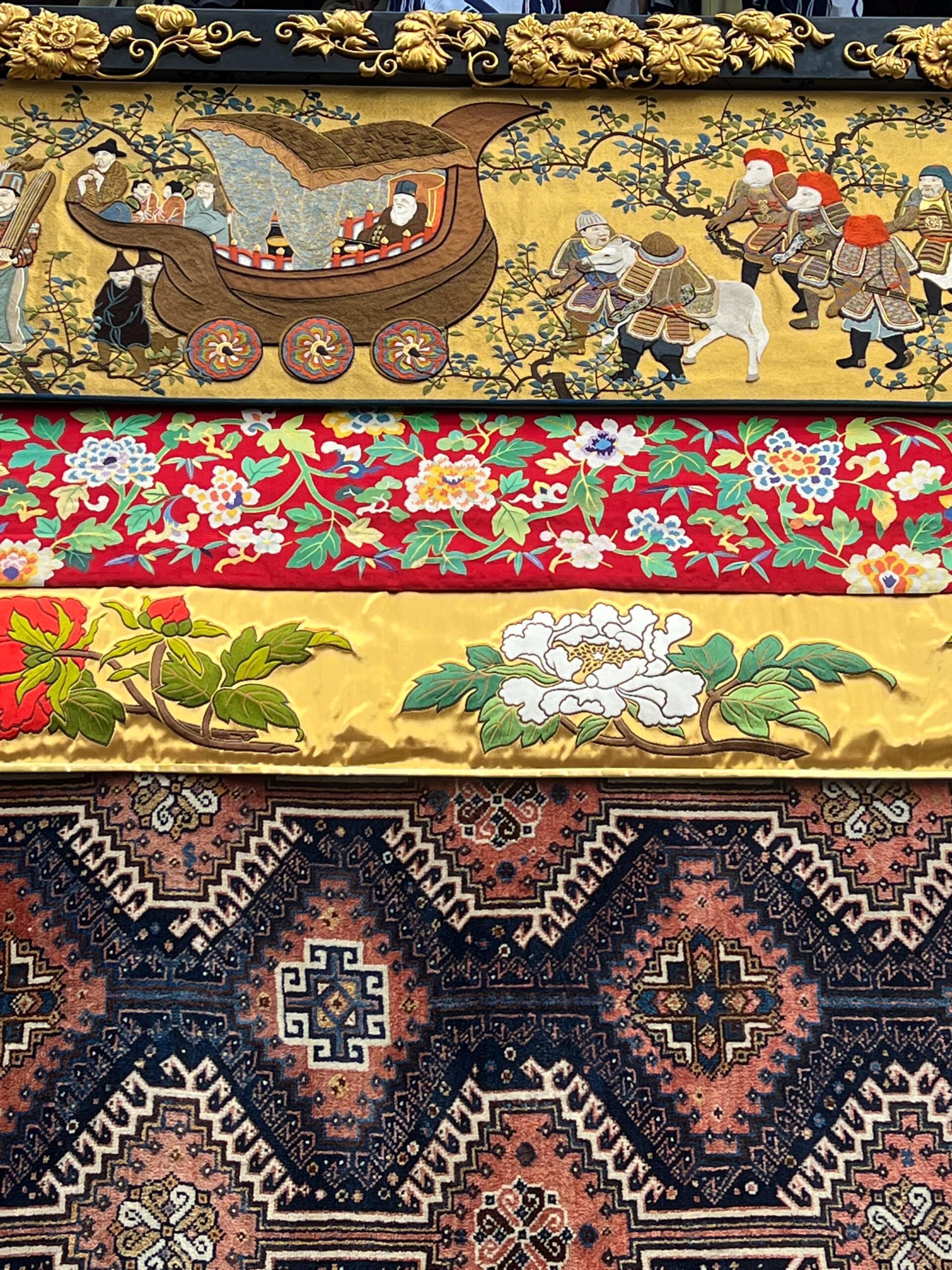
Photo: Detail of a textile hanging on a festival float. Carpets and woven panels were often used as front hangings and side coverings.
Oriental Carpets on Gion Matsuri Floats
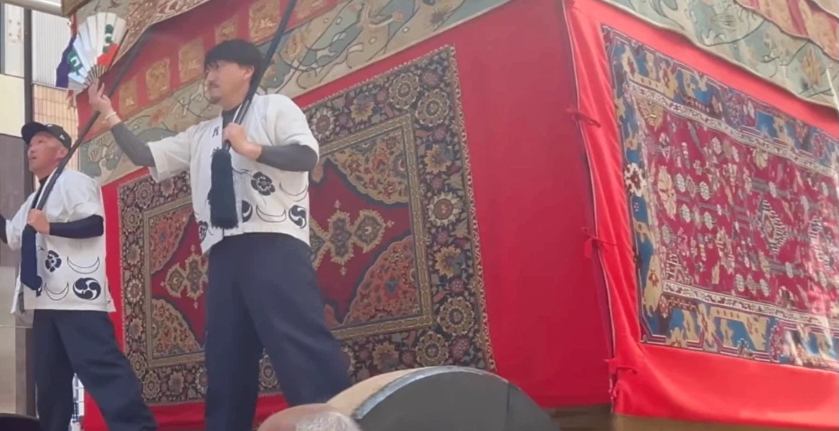
Tsuki Hoko — 月鉾
Tsuki Hoko is one of the major floats of Gion Matsuri. Its decoration includes historic imported textiles, including Indian and Turkish carpets used as part of the float’s textile arrangement.
Photo: Textile panels soften the wooden structure and add prestige.
Hōka Hoko — 放下鉾
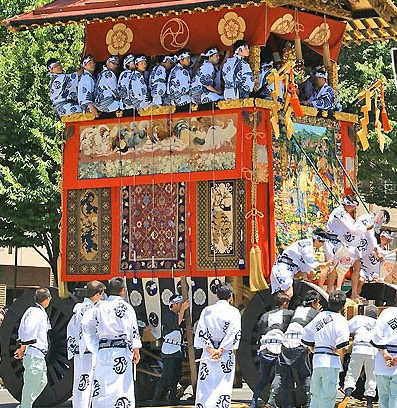
Known for textiles linked to Indian and Persian traditions, showing medallion compositions and floral structures connected to Persian design language.
Photo: Shared visual language across Persia, India, and Japan.
Kanko Hoko — 函谷鉾
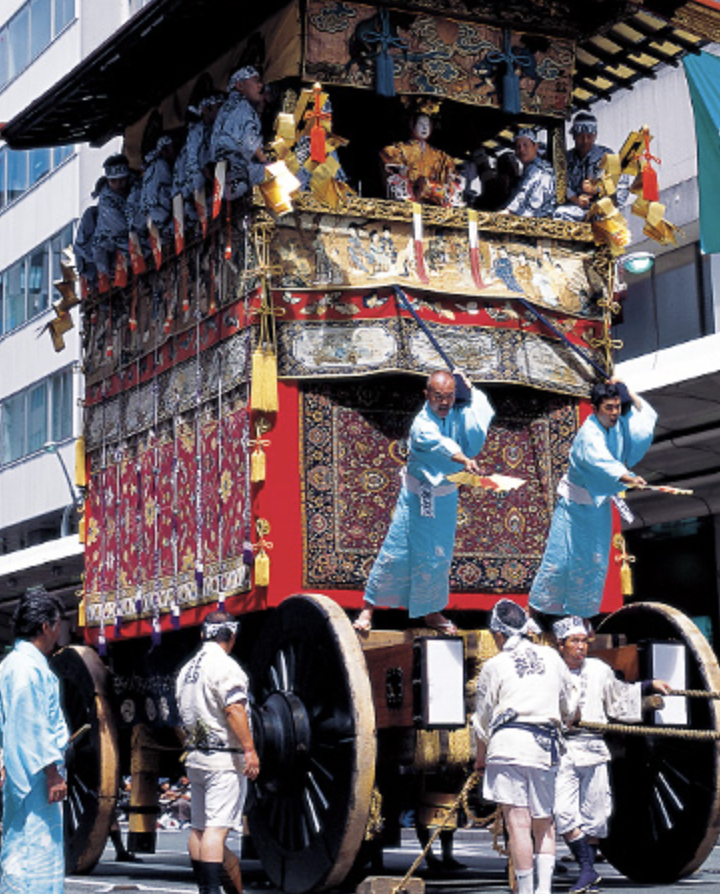
Preserves textiles including a 17th-century Lahore carpet, reflecting Mughal interpretations of Persian floral design traditions.
Photo: Mughal floral rhythm adds softness and depth.
Niwatori Hoko — 鶏鉾
Includes rare imported textiles from the 16th–17th centuries, preserved through continuous use and adaptation within the festival.
Photo: The textile survives not by isolation, but through continuous use, repair, and reintegration within the living tradition of the festival.
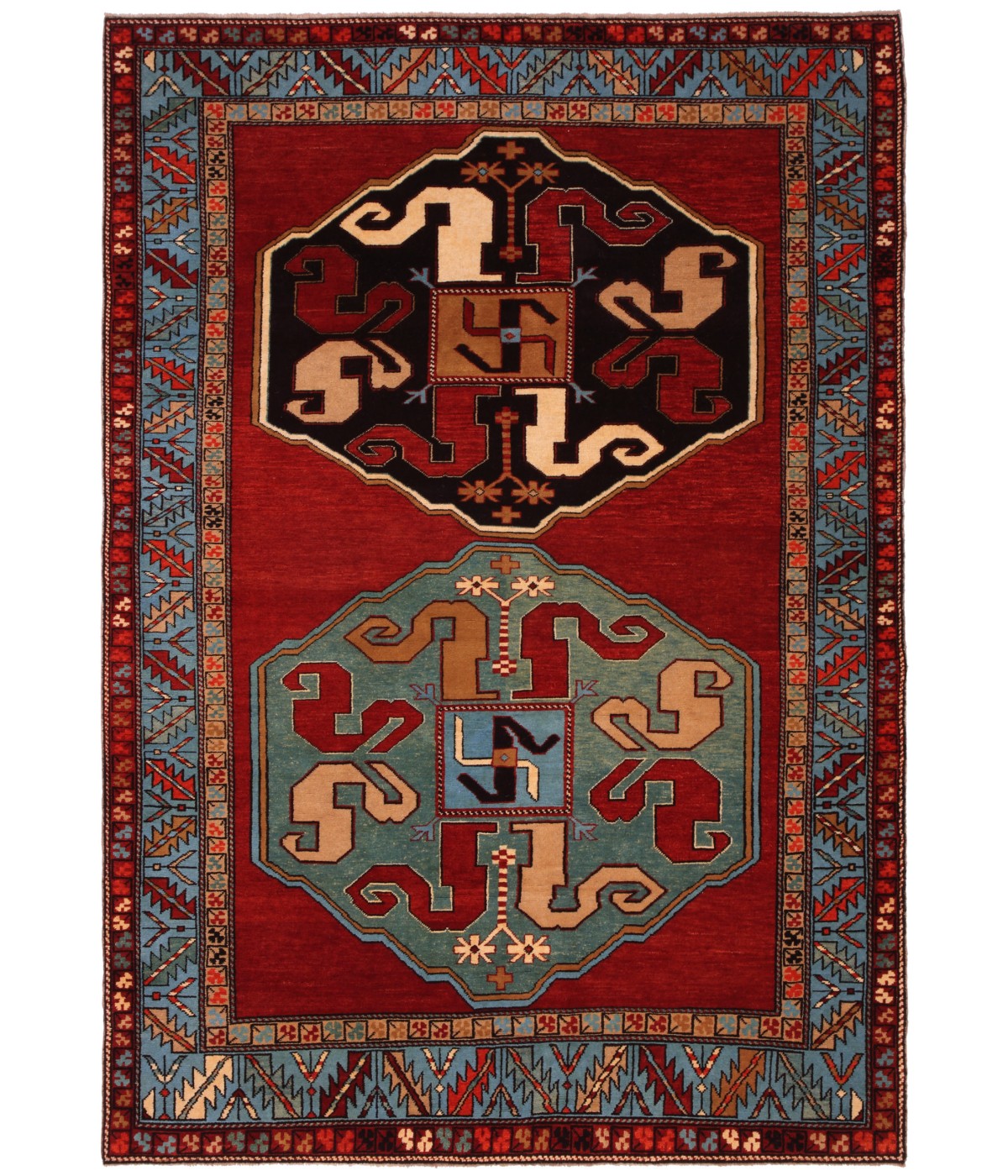
Photo: Detail of an Ararat Rugs handwoven wool carpet. Natural dyes and hand-spun wool create depth, irregularity, and life within the surface.
Why This Tradition Matters to Us
At Ararat Rugs, we believe a rug should not be understood only as decoration. Historically, rugs were made for use: to protect the body from cold ground, to define interior space, to create warmth, and to carry the memory of the people who made them.
This is why the use of carpets on Japanese festival floats feels so meaningful. The rugs were not treated as ordinary luxury goods. They were placed on sacred and public structures, preserved by communities, repaired across generations, and shown to the public as cultural treasures.
In this sense, Gion Matsuri confirms a belief that is central to Ararat Rugs: a woven textile has a life beyond commerce. It can become architecture, ritual surface, historical document, and cultural bridge.
Three Roles of the Carpets on Festival Floats
“A carpet on a Japanese festival float is not merely an ornament.
It is a woven memory carried through the streets.” -Hakan KARAR
Prestige
Imported carpets represented the cultural and economic strength of Kyoto’s merchant communities. As rare objects from distant regions, they reflected access to global trade and an awareness of foreign artistic traditions.
Protection
Textiles helped define and protect sacred space. On the floats, carpets functioned not only visually but structurally—creating a sense of enclosure, warmth, and separation appropriate for ritual use.
Continuity
These textiles were not preserved in isolation. They were used, repaired, and maintained over generations. Their value lies not only in rarity but in their continued presence within a living tradition.
Japanese Research and Historical Sources
Japanese scholars have studied the imported textiles of Gion Matsuri in considerable detail. Research associated with institutions such as the International Research Center for Japanese Studies highlights how the festival floats preserve a remarkable group of foreign textiles originating from China, India, the Islamic world, and Europe.
Museum and cultural sources in Kyoto further describe how certain floats incorporate textiles that are widely understood to be connected to Ottoman, Persian, and Indo-Islamic weaving traditions. In some cases, materials have been identified as reflecting Mughal or Lahore carpet design, while others show clear relationships to Persian medallion and floral compositions.
Together, these examples reveal how Gion Matsuri functions not only as a local festival but also as a living archive of global textile exchange, where imported works were adapted, preserved, and integrated into Japanese cultural practice.
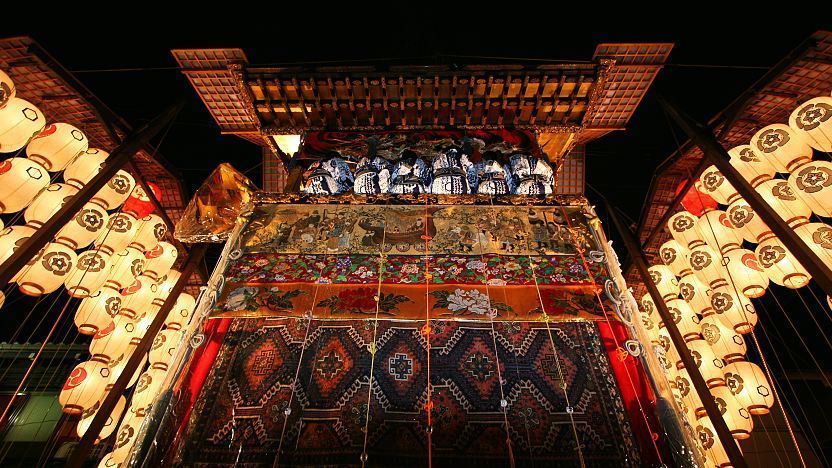
Photo: At night, the float becomes a luminous structure. Lanterns, wood, and textiles together create a powerful ceremonial atmosphere.
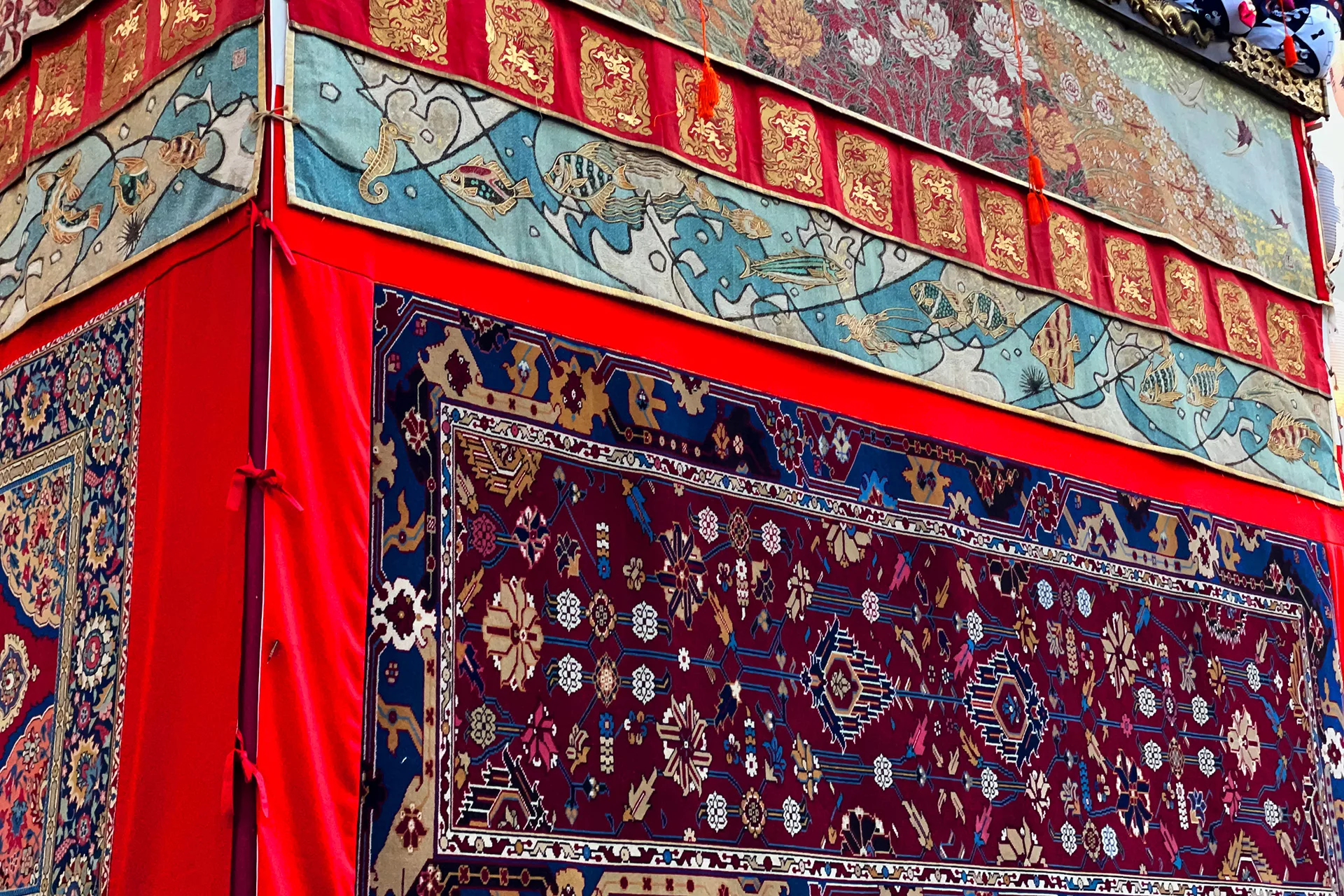
Photo: Antique rugs detail. Like the textiles used on Japanese floats, rugs carry memory through material, pattern, and use.
A Shared Respect for Woven Culture
The carpets of Gion Matsuri remind us that textiles have always moved between cultures. A carpet woven in Persia, India, or Anatolia could travel across oceans, arrive in Japan, and become part of a local festival tradition. It would then be preserved not as a silent object, but as something carried, seen, and remembered.
For Ararat Rugs, this story is deeply important. It shows that the true value of a rug is not only in its beauty or age. Its value lies in its ability to connect people, places, materials, and memories across time.