Safavid Tabriz Carpet


Safavid Tabriz Carpet – Reinterpreted from a 17th Century Museum Fragment
Origin and Inspiration
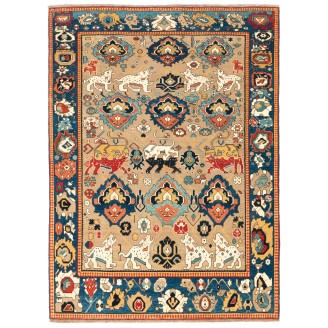
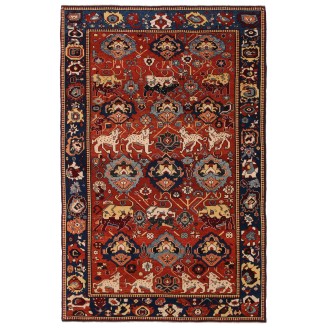
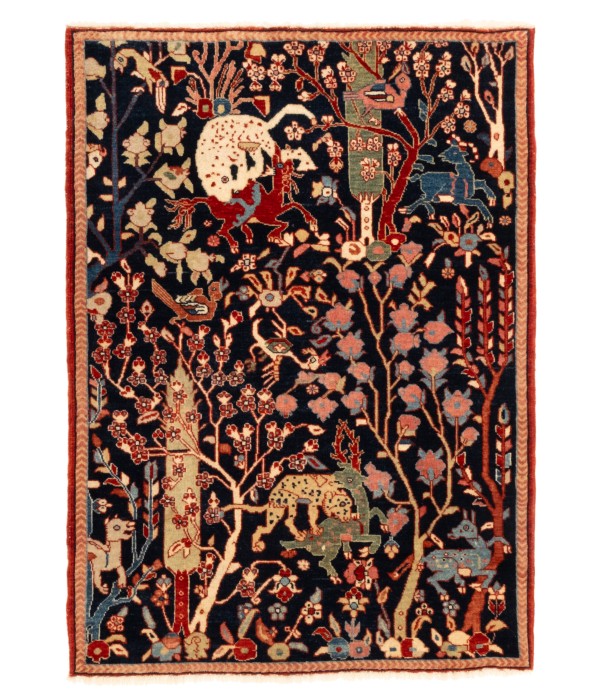
This carpet is inspired by a rare 17th-century rug fragment from Northwest Iran, attributed to the weaving centers of Tabriz during the Safavid period.
The original piece, preserved in a Canadian private collection and exhibited in From Ashgabat to Istanbul at the Textile Museum of Canada, represents a refined example of Safavid textile design—where courtly aesthetics and technical mastery reached their peak.
Fragments such as this are especially significant. They are not incomplete objects, but rather surviving witnesses of larger masterpieces, offering insight into the structure, palette, and artistic language of their time.
A Fragment as a Complete Idea:
In this reinterpretation, the fragment is treated not as a partial design, but as a complete visual statement—allowing its intricate composition to stand independently while preserving its historical character.
Materials and Craftsmanship
This piece is woven using traditional materials and techniques that reflect the refinement of classical Persian carpet production.
✔ Materials:
Pile: Hand-spun wool, dyed with natural pigments
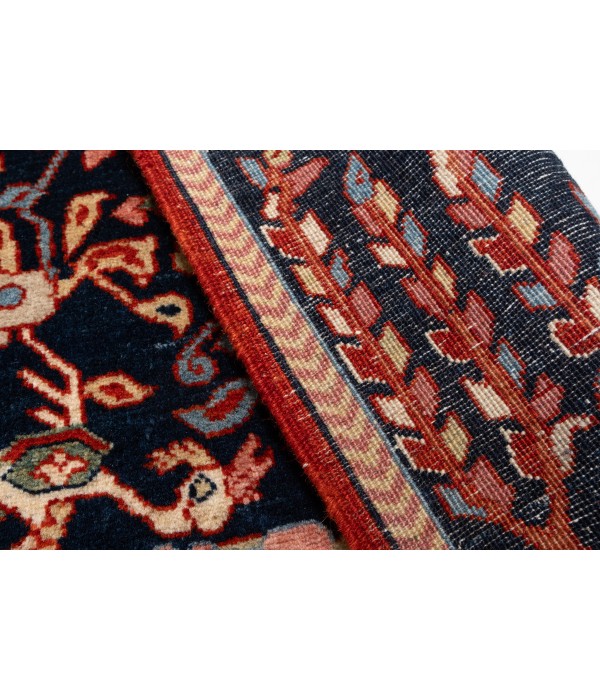
Foundation: Cotton warp and weft, ensuring structural precision
✔ Weaving Technique:
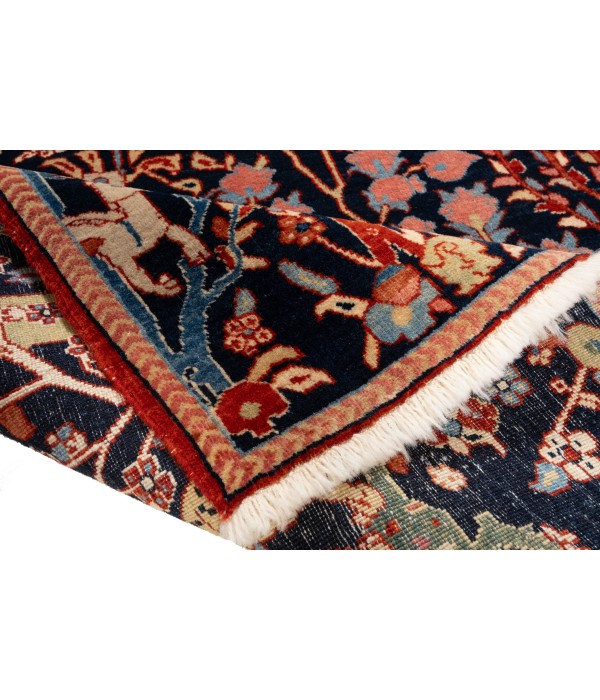
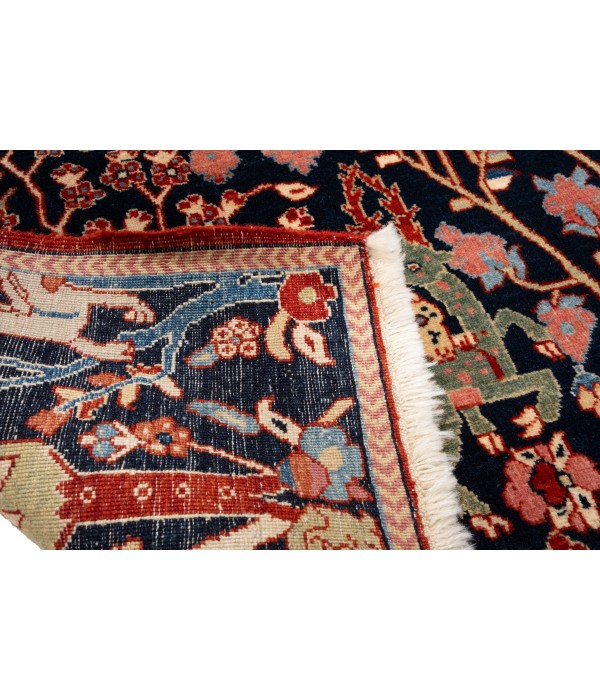
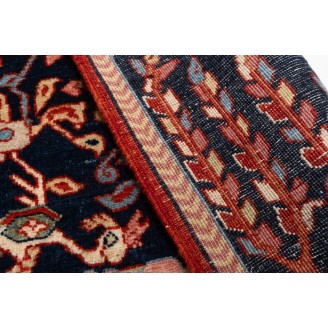
Hand-knotted using fine Persian knotting techniques
High knot density, enabling delicate articulation of motifs
Low pile height, enhancing clarity and detail
✔ Origin:
Handwoven in workshops that continue the legacy of Persian weaving traditions
✔ Character:
Smooth, refined surface with precise pattern definition
Balanced structure suitable for both display and use
Design and Pattern
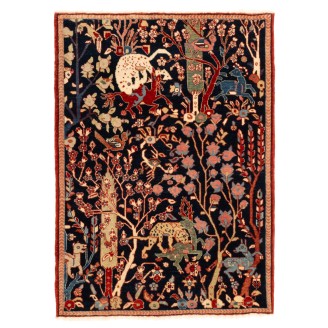
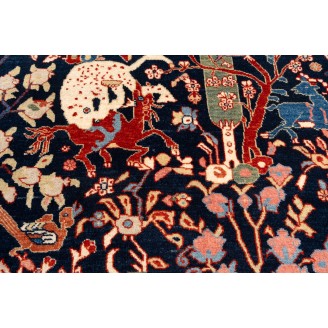
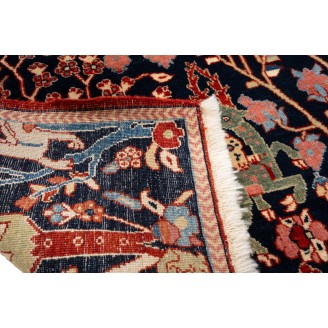
The design reflects the sophisticated visual language of Safavid Tabriz carpets, where geometry, vegetal ornament, and figurative elements are seamlessly integrated.
✔ Field Composition:
Derived from a historical fragment, the composition appears both structured and organic
The design avoids rigid symmetry, instead emphasizing flow, movement, and spatial continuity
✔ Motif Language:
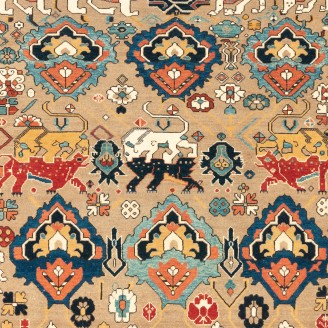
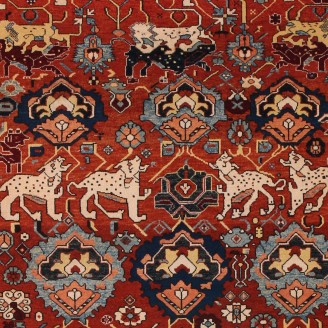
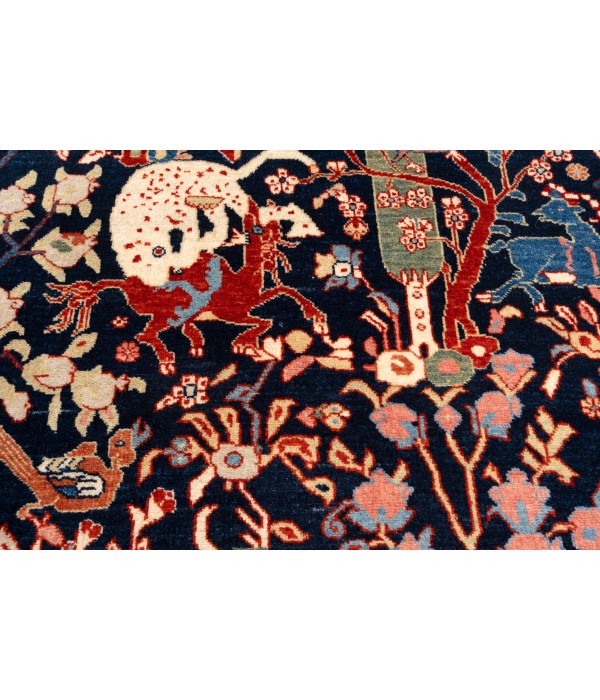
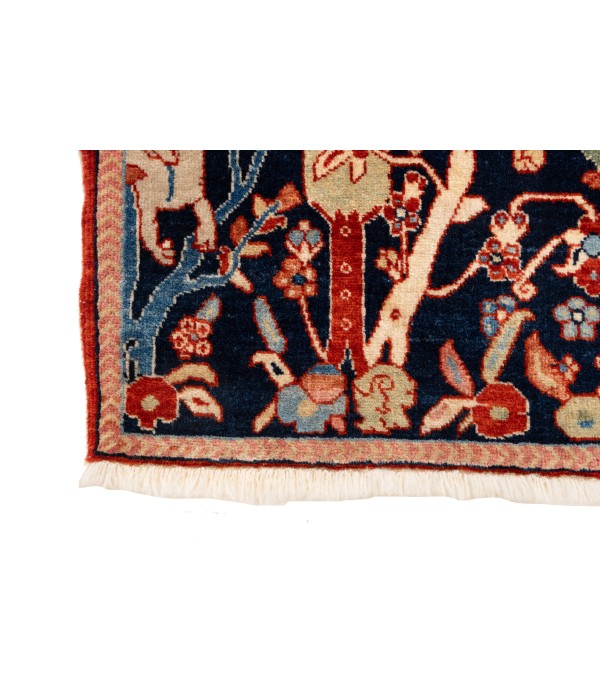
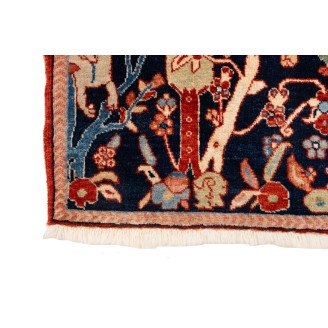
Stylized floral and vegetal elements are interwoven within a geometric framework
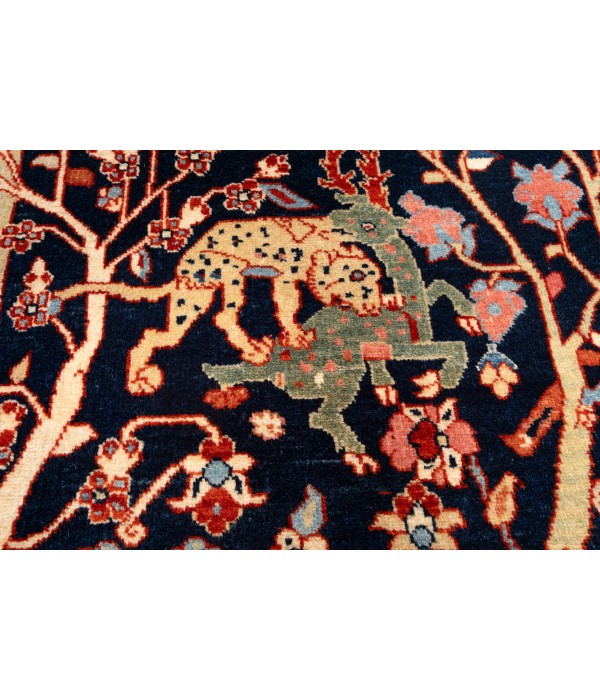
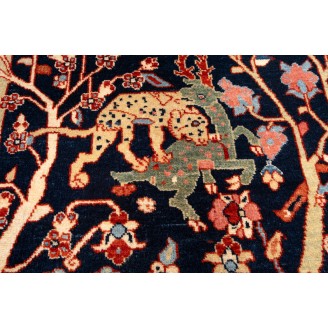
Animal motifs are subtly incorporated into the composition, adding a narrative dimension to the design
These figures, often integrated within foliage and pattern, reflect the storytelling tradition of Safavid court carpets
✔ Animal Elements:
The presence of animals connects the design to a long-standing Persian artistic tradition, where nature, symbolism, and imagination coexist
Rather than dominant or isolated figures, the animals are harmoniously embedded within the pattern
This integration creates a sense of discovery, revealing new details upon closer observation
Such motifs were often associated with themes of vitality, balance, and the natural world in Safavid visual culture
✔ Structural Concept:
The fragment-based composition creates a sense of intimacy and focus
The combination of vegetal ornament and animal imagery softens the geometry, creating a dynamic visual rhythm
✔ Borders:
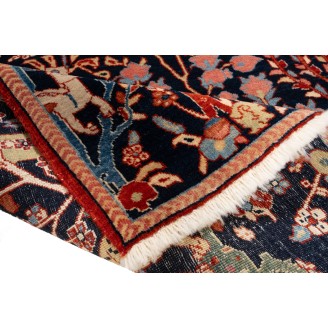
Complementary borders frame the composition with restraint
The emphasis remains on the richly detailed, fragment-derived field
Color Palette and Dyes
The palette reflects the subtle sophistication associated with Safavid carpets.
This rug boasts a harmonious blend of 11 natural colors, each derived from traditional dyeing methods: Natural Wool Color 320: Specially Washed Olive Green 425: Dyer’s Weed Pyrite Gold 128: Spurge Imperial Red 415: Madder Root Red Oxide 438: Synthetic Dye Dark Salmon 310: Madders Root - Walnut Hulls Russian Green 418: Henna - Indigo Pale Green 439: Chamomile - Indigo Jericho Jade 25: Spurge - Indigo Midnight Blue 347: Spurge - Madder Root - Indigo Dark Sky Blue 23: Indigo
The result is a harmonious and mature color language that enhances both the design and its historical reference.
Summary
This carpet is a refined reinterpretation of a 17th century Safavid fragment from Tabriz—an object that embodies the artistic and technical achievements of one of the most important periods in Persian carpet history.
By preserving the scale and character of the original fragment, this piece offers a unique perspective:
not a reconstruction of a lost whole, but a celebration of what remains.
It stands as both a work of design and a historical dialogue—bridging past and present through material, pattern, and craftsmanship.
Dimensions:
2 ft 10 in x 3 ft 11 in ( 88cm x 120cm )