Mamluk Carpet with Cusped Medallion


Mamluk Carpet with Cusped Medallion – 16th Century Cairene Design Reinterpreted
Origin and Inspiration
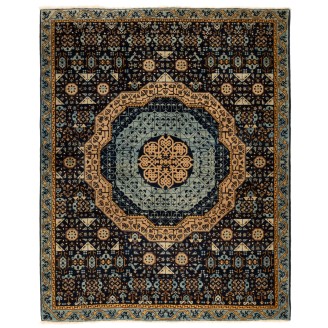
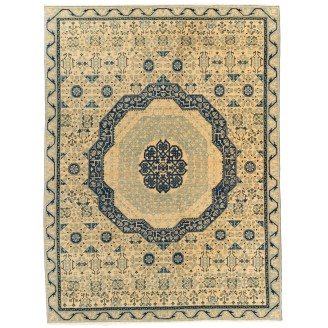
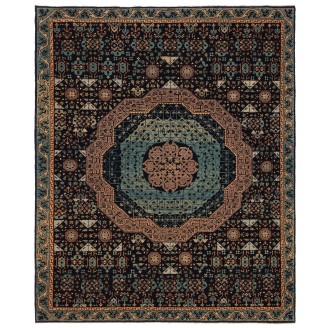
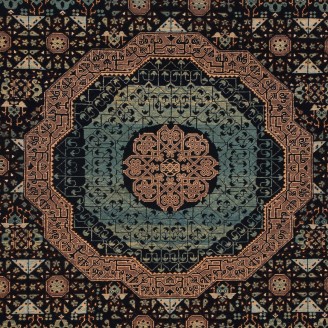
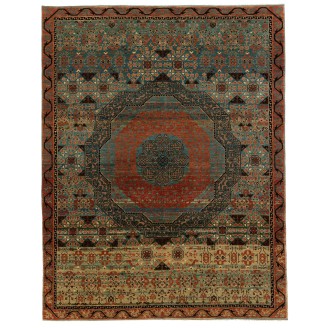
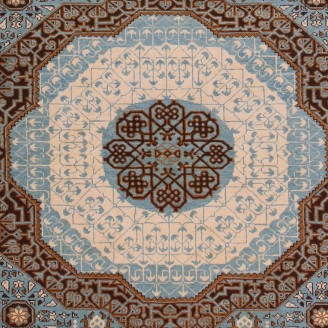
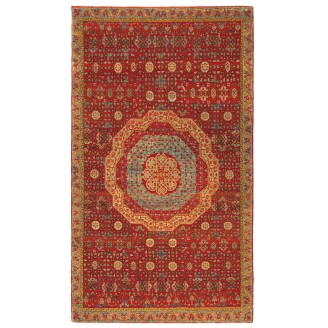
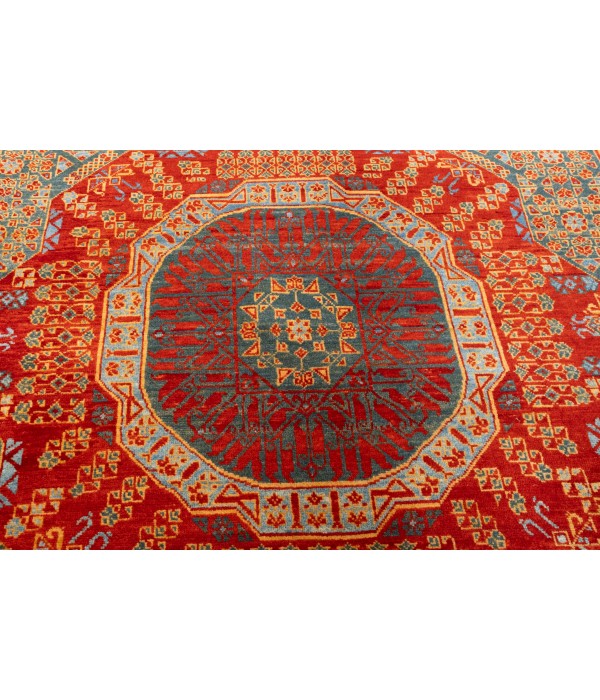
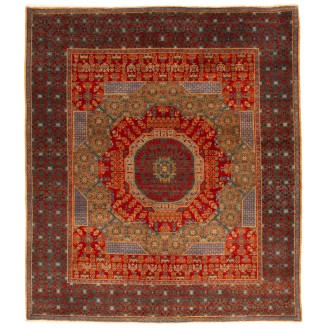
This carpet is inspired by a rare variation within the classical Mamluk tradition, featuring a cusped (lobed) central medallion—a refined evolution of the geometric compositions developed in Cairo during the late 15th and early 16th centuries.
Mamluk carpets are among the most distinctive in textile history, known for their highly structured geometry and medallion-based compositions. Produced in royal workshops, primarily in Cairo, they reflect a unique synthesis of mathematical precision and artistic expression.
The source design of this piece corresponds closely to examples preserved in major collections, where cusped medallions introduce a softer, more fluid interpretation of the otherwise strict geometric system.
A Refined Variation of a Classical System:
While most Mamluk carpets emphasize polygonal and star-shaped medallions, the cusped form introduces curvature and rhythm—marking a subtle but important transformation within the tradition.
Materials and Craftsmanship
This piece is woven using traditional materials and techniques, reflecting the discipline of classical carpet production.
✔ Materials:
Pile: Hand-spun wool, naturally dyed
Foundation: Wool structure ensuring durability and flexibility
✔ Weaving Technique:
Hand-knotted using traditional methods
Fine knotting allows precision in geometric articulation
Low pile height enhances clarity of the medallion and surrounding motifs
✔ Origin:
Handwoven in Anatolia, preserving historical weaving practices
✔ Character:
Balanced structure with a smooth and refined surface
Designed for both collectible and decorative use
Design and Pattern
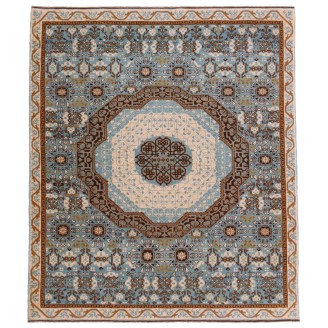
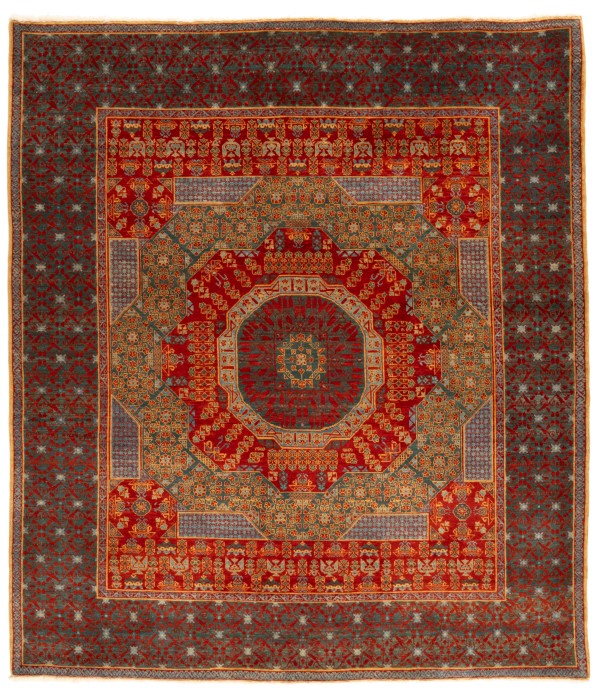
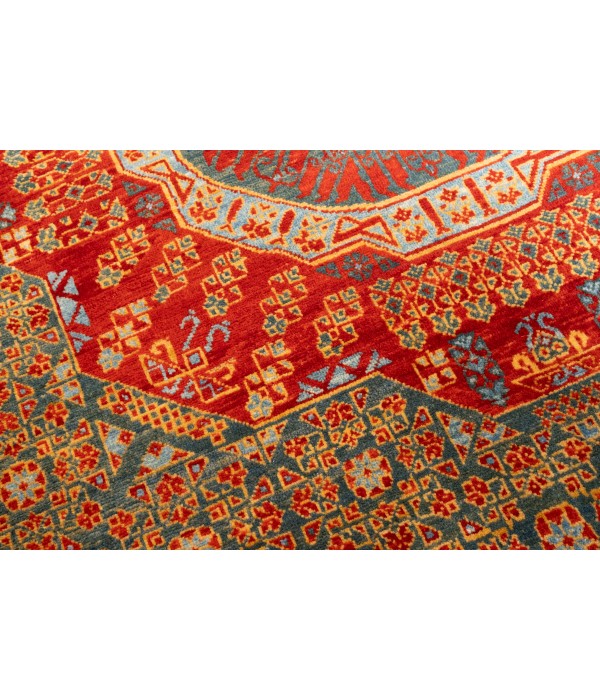
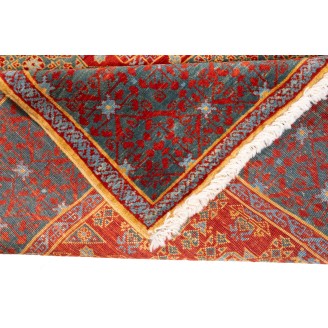
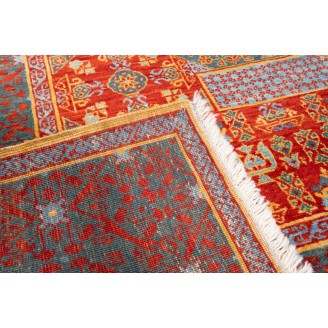
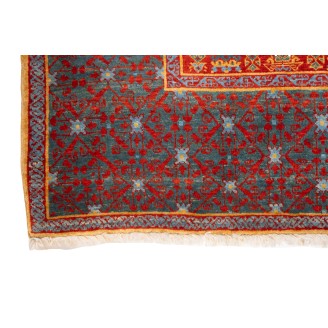
The design is defined by a powerful central composition, structured around the cusped medallion and supported by a network of geometric elements.
✔ Central Medallion:
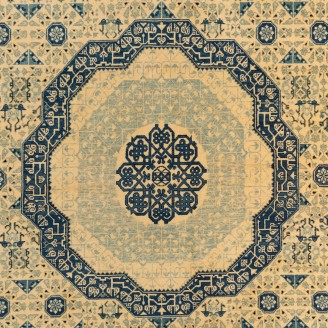
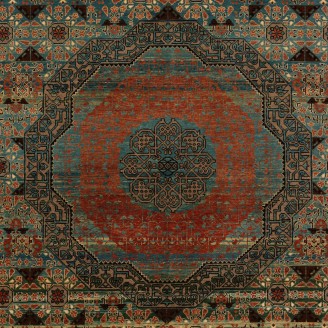
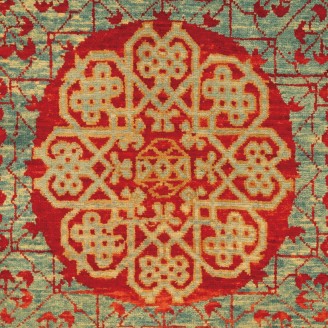
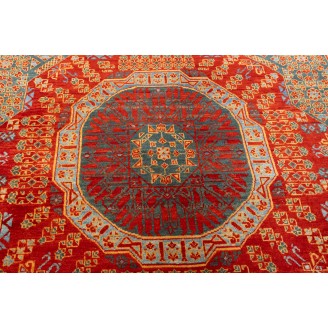
A cusped (lobed) medallion forms the focal point of the composition
The curved edges soften the otherwise angular geometry, creating visual movement
The medallion acts as the organizing principle for the entire design
✔ Field Composition:
Surrounding motifs radiate outward from the central medallion
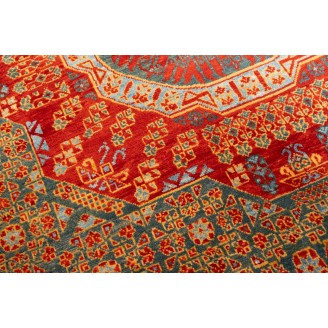
Smaller geometric elements interlock to create a cohesive, almost kaleidoscopic structure
The composition maintains balance through symmetry and repetition
✔ Geometric Language:
The design reflects the mathematical precision characteristic of Mamluk carpets
Interlocking stars, polygons, and compartments create a layered visual depth
✔ Borders:
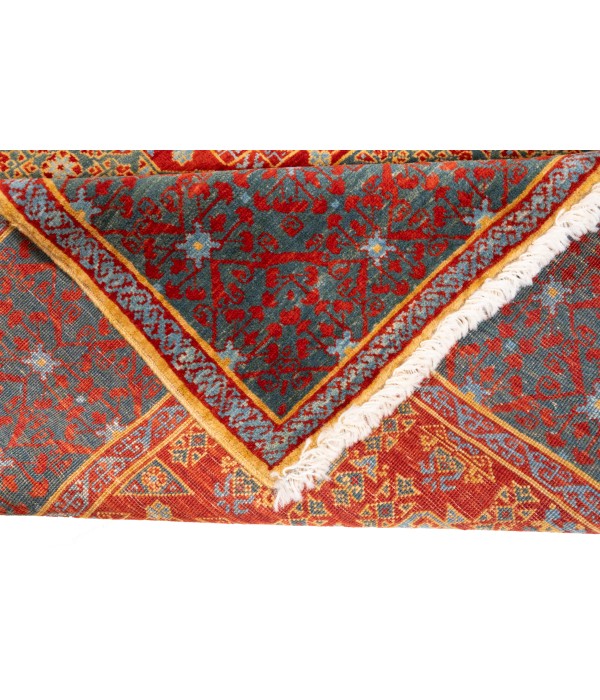
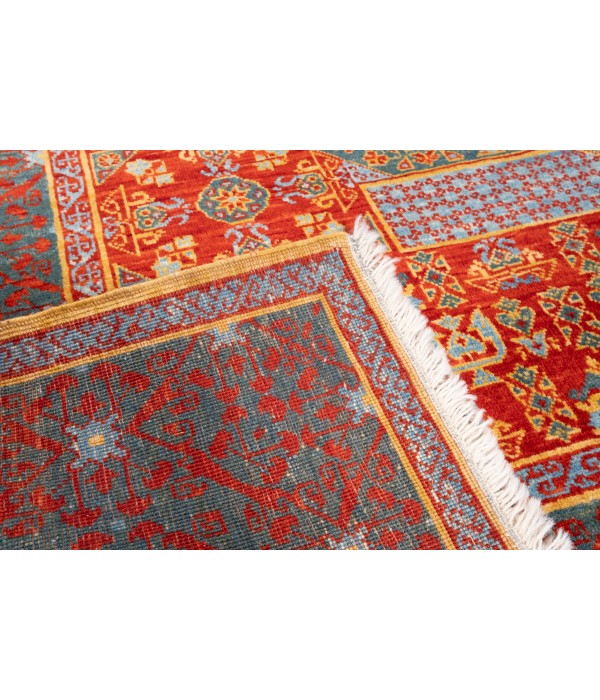
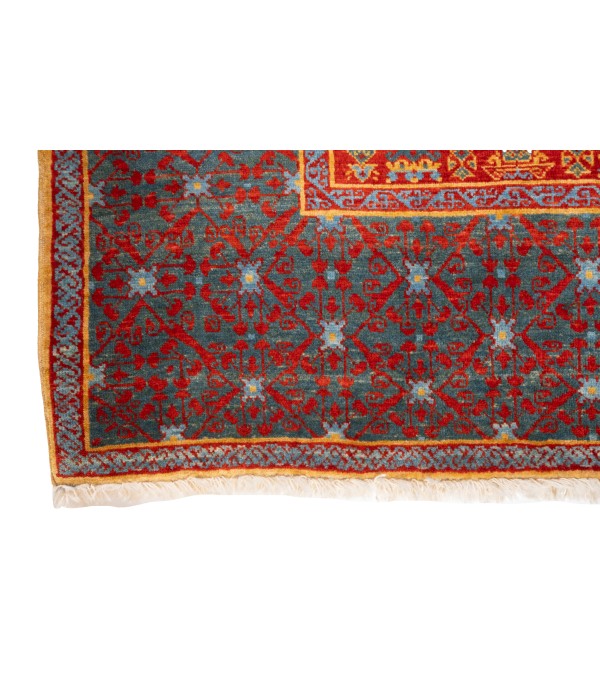
Framed by borders composed of repeating cartouches and geometric forms
These elements reinforce the structure while containing the central field
Color Palette and Dyes
The palette follows the traditional chromatic language of Mamluk carpets.
This rug boasts a harmonious blend of 4 natural colors, each derived from traditional dyeing methods: Sunray Color 405: Henna Imperial Red 415: Madder Root Pine Tree 420: Henna - Indigo Cadet Blue 26: Spurge - Indigo
This restrained yet vibrant palette enhances the clarity of the design and its architectural qualities.
Summary
This carpet represents a refined interpretation of a classical Mamluk design, distinguished by its cusped medallion—a subtle yet significant variation within the tradition.
Rooted in the artistic production of 16th century Cairo, it reflects a unique balance between geometry and fluidity, structure and ornament.
Rather than simply reproducing a historical pattern, this piece explores a nuanced evolution of Mamluk design—where rigid forms are softened, and symmetry gains rhythm.
It stands as both a decorative textile and an intellectual composition, embodying one of the most distinctive visual languages in the history of carpets.
Dimensions:
6 ft 7 in x 7 ft 7 in ( 202cm x 232cm )