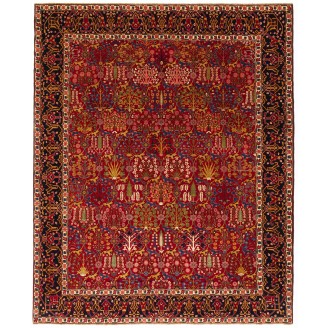
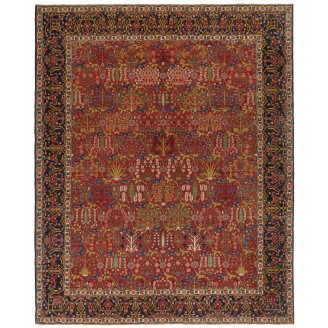
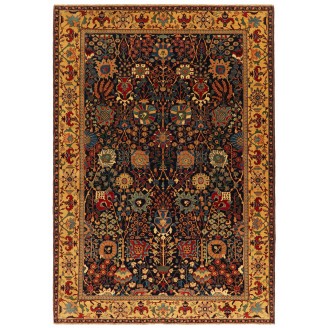
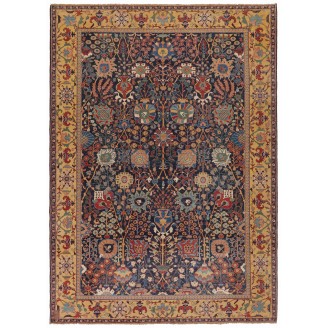
Isfahan Carpet – New Julfa Design – Thyssen-Bornemisza Collection
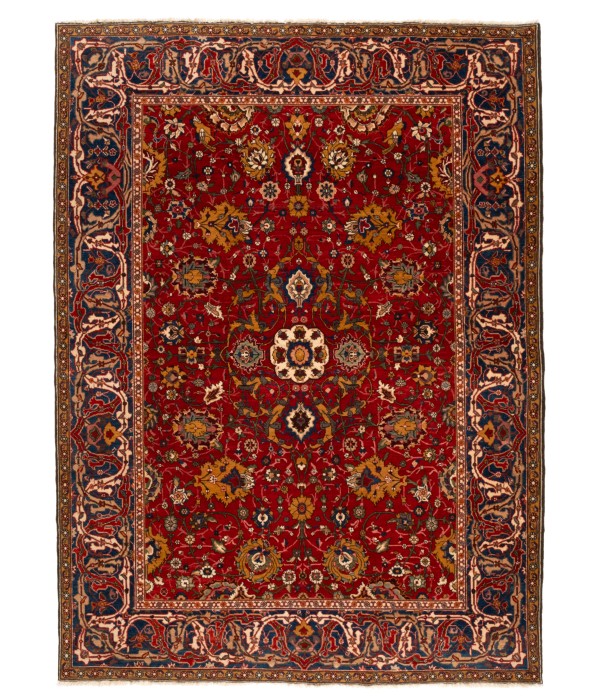

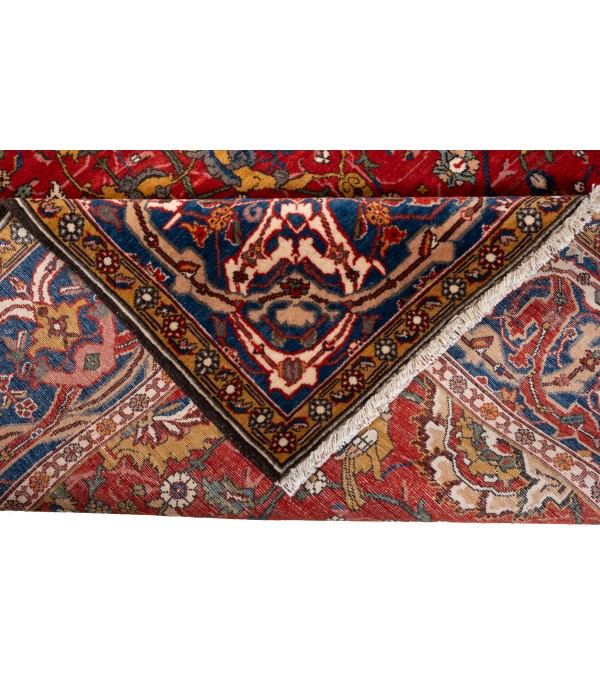
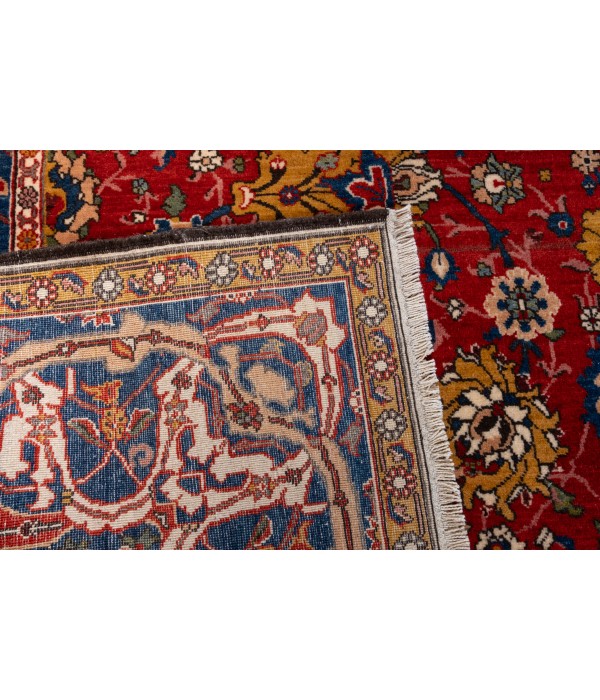
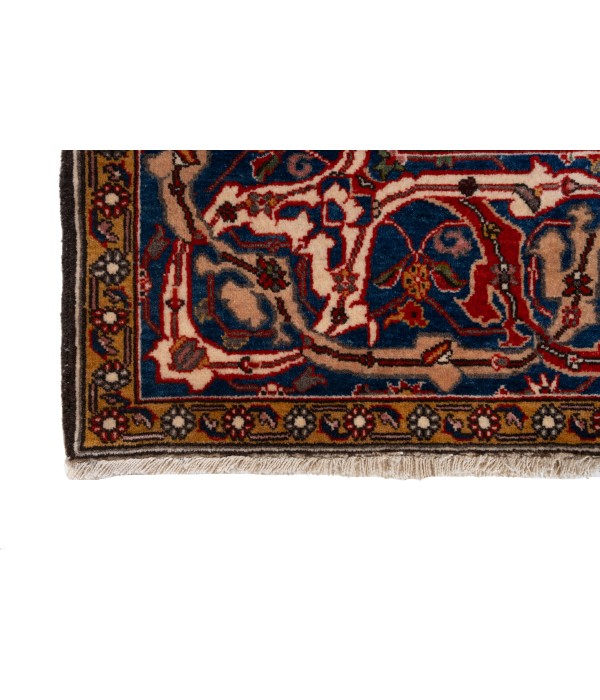
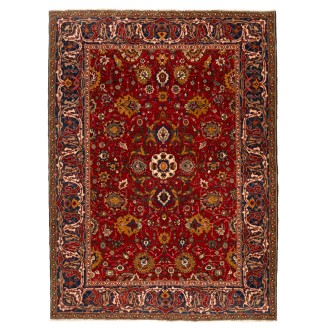

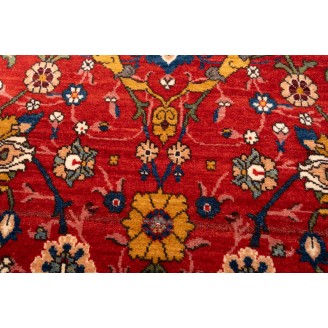
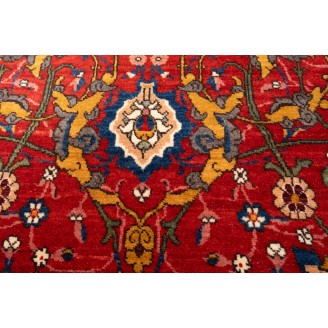
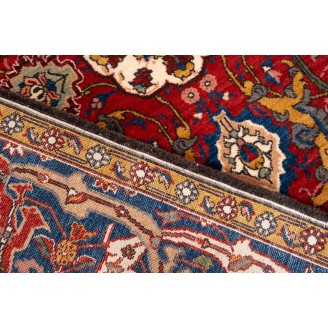
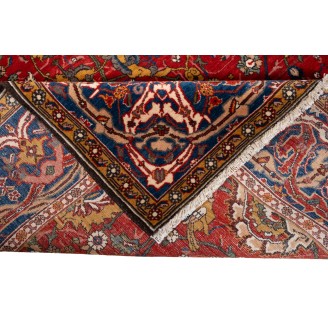
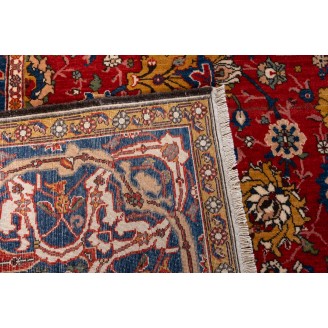
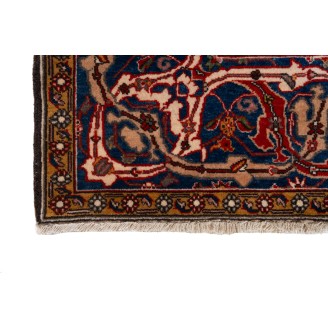
Safavid Isfahan Carpet – New Julfa Armenian Trade Design, Early 17th Century
Origin and Inspiration
This carpet is inspired by a rare group of early 17th century carpets associated with Isfahan and the New Julfa workshops, documented in the Thyssen-Bornemisza Collection and studied in Orientalische Teppiche by Volkmar Gantzhorn.
For many years, carpets of this type were often attributed to India due to their refined drawing and delicate structure. However, modern research has shown that they belong to a distinct Safavid tradition connected to the Armenian merchant community of New Julfa.
Established in the early 17th century under Shah Abbas I, New Julfa became a major center of international trade, linking Persia with Europe and India through extensive Armenian merchant networks .
A Crossroads of Cultures:
These carpets reflect a unique moment in history, where Persian court design, Armenian craftsmanship, and global trade influences converged—resulting in a refined and cosmopolitan textile language.
Materials and Craftsmanship
This piece reflects the elegance and technical refinement associated with Safavid court production.
✔ Materials:
Pile: Hand-spun wool, naturally dyed
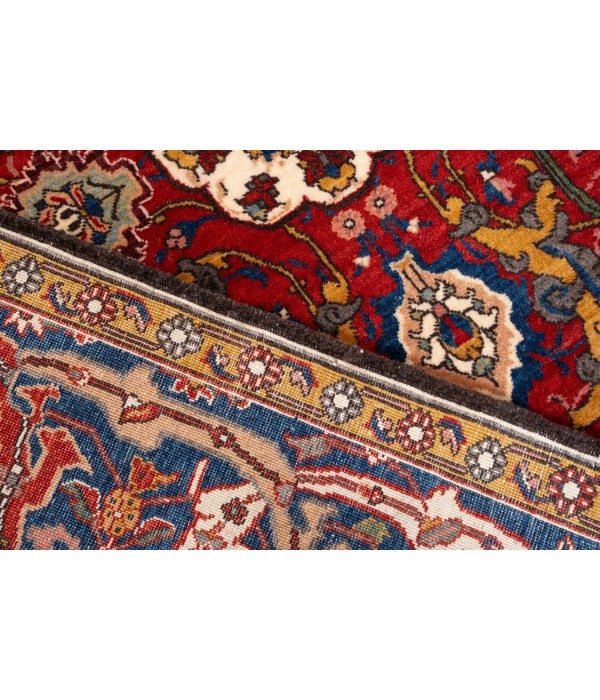
Foundation: Cotton warp and weft, allowing fine structural control
✔ Weaving Technique:
Hand-knotted using Persian (asymmetrical) knotting
Fine weave enabling detailed articulation of complex motifs
Soft, flexible structure characteristic of high-quality Isfahan production
✔ Origin:
Handwoven following classical Persian workshop traditions
✔ Character:
Refined surface with delicate pattern resolution
Balanced between artistic expression and technical precision
Design and Pattern
The design reflects the refined and evolving visual language of early Safavid Isfahan carpets, where structure becomes more fluid and ornamental.
✔ Field Composition:
A balanced and elegant layout, often without a rigid central medallion
The design flows across the surface with a sense of rhythm and openness
✔ Motif Language:
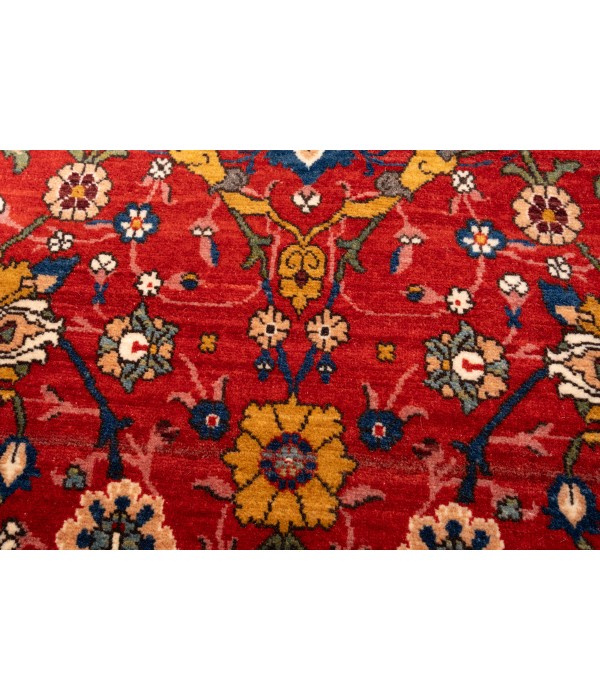
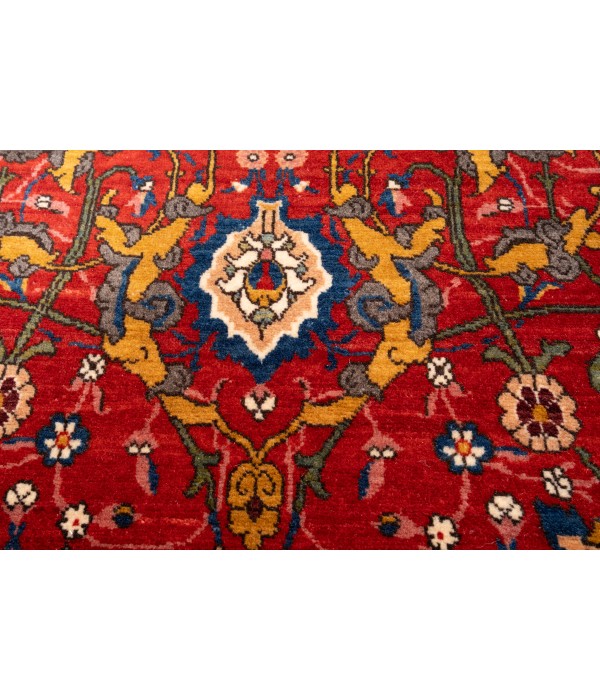
Stylized floral and arabesque elements are arranged in a sophisticated network
The drawing is finer and more delicate compared to earlier Persian traditions
✔ Structural Concept :
The design represents an early stage of what would later develop into more elaborate court carpets
It combines precision with softness, marking a transition from strict geometry toward more naturalistic ornament
✔ Cultural Layer:
The design reflects the influence of Armenian merchants and artisans in New Julfa
These networks played a key role in shaping artistic production and international taste
✔ Borders:
Elegant borders frame the composition without overpowering the field
The emphasis remains on the refined internal structure
Color Palette and Dyes
The palette reflects the subtle sophistication associated with early Isfahan carpets.
This rug boasts a harmonious blend of 11 natural colors, each derived from traditional dyeing methods: Rare Grey 105: only specially washed Natural Wool Color 320: Specially Washed Dark Brawn 316: No Dye - Sheep’s own Color Sunray Color 405: Henna Burlywood 135: Spurge - Madder Root Melancholy 122: Spurge - Madder Root Falu Red 416: Madder Root Dark Sienna 402: Madder Root - Pomegranate - Spurge - Walnut Hulls Russian Green 418: Henna - Indigo Yellow Green 419: Henna - Indigo Gunmetal Blue 409: Indigo
The overall effect is lighter and more nuanced than earlier, more saturated Persian carpets.
Summary
This carpet represents a refined interpretation of an early 17th century Isfahan design, emerging from the unique cultural and economic environment of New Julfa.
Once misunderstood as Indian, these carpets are now recognized as part of a distinct Safavid tradition shaped by Armenian merchant networks and global trade connections.
The result is a textile of exceptional refinement—where precision, elegance, and cultural exchange come together in a unified artistic language.
It stands as both a decorative object and a historical document, reflecting one of the most cosmopolitan moments in the history of Persian carpets.
Dimensions:
5 ft 11 in x 7 ft 11 in ( 181cm x 242cm )