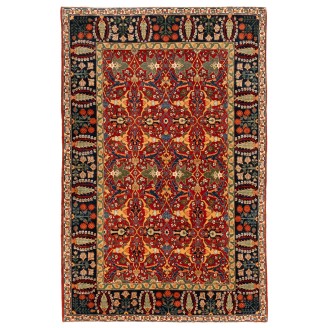
Kerman Vase Technique Arabesque Carpet
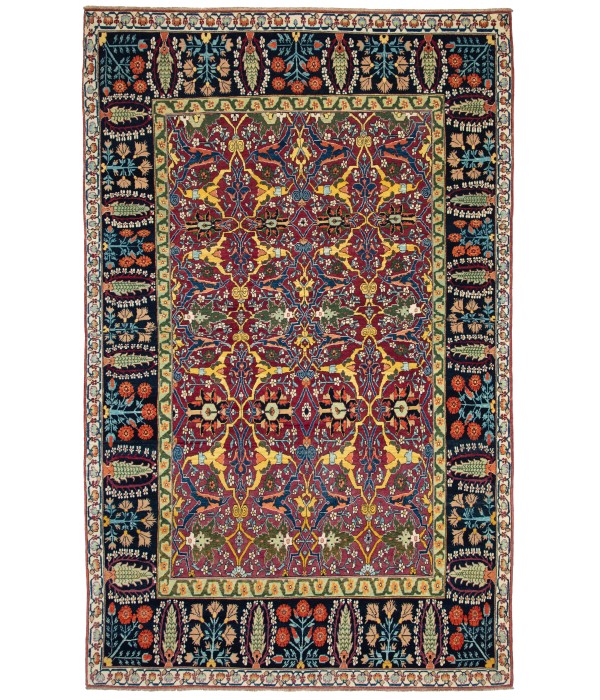
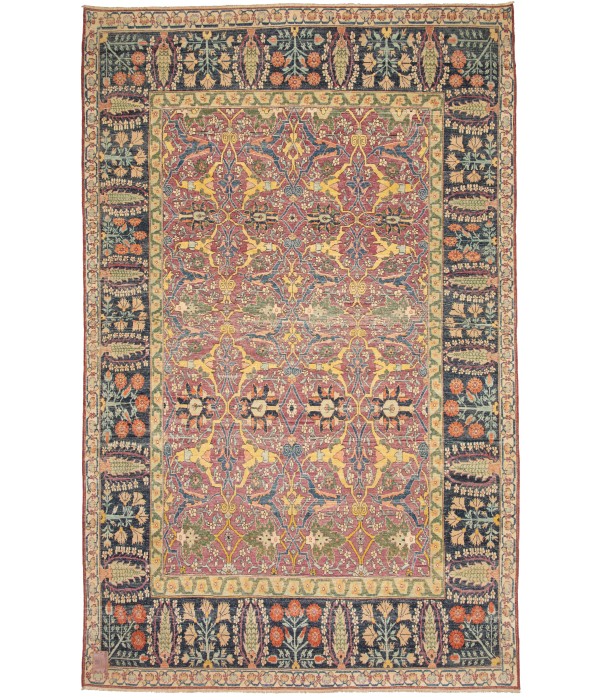
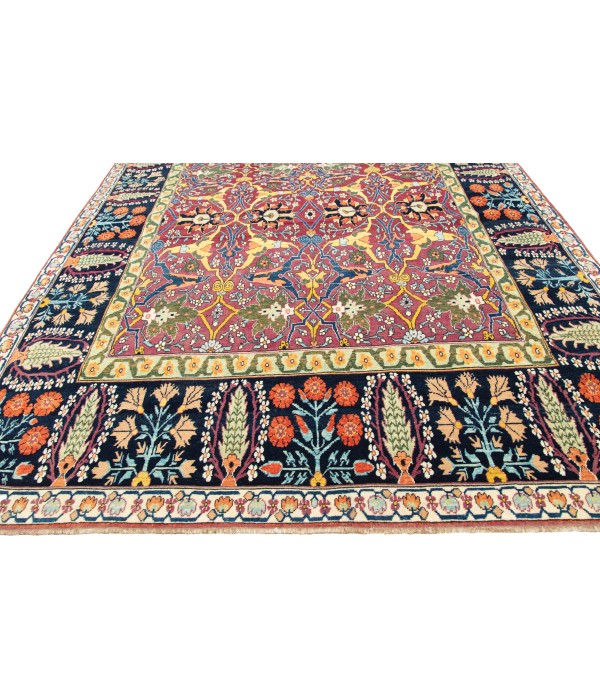
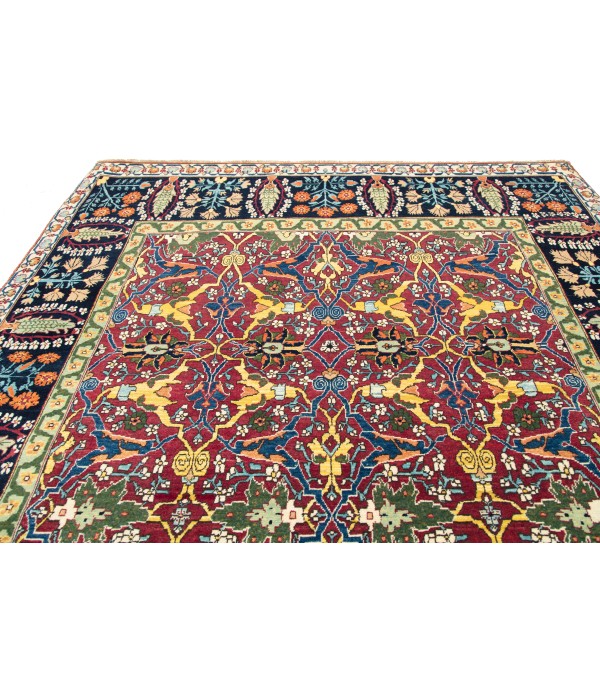
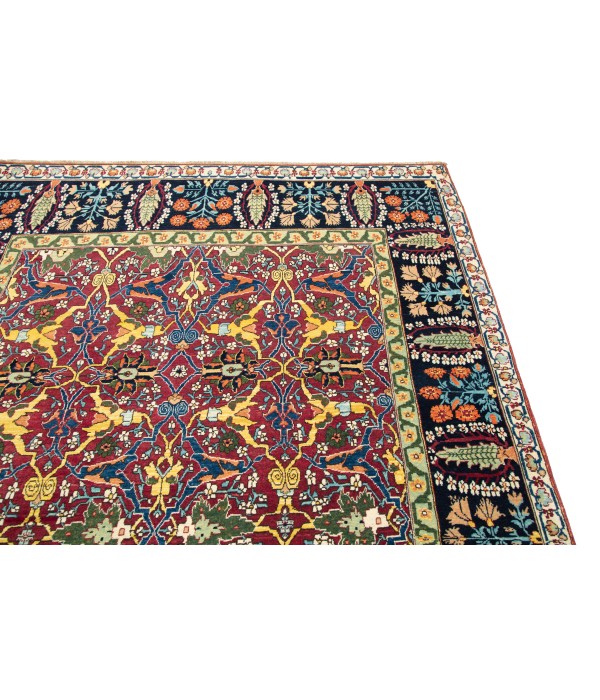
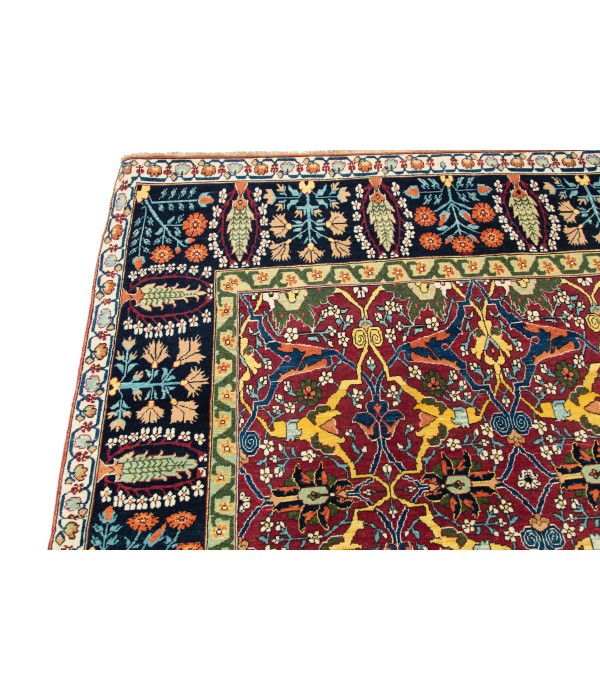
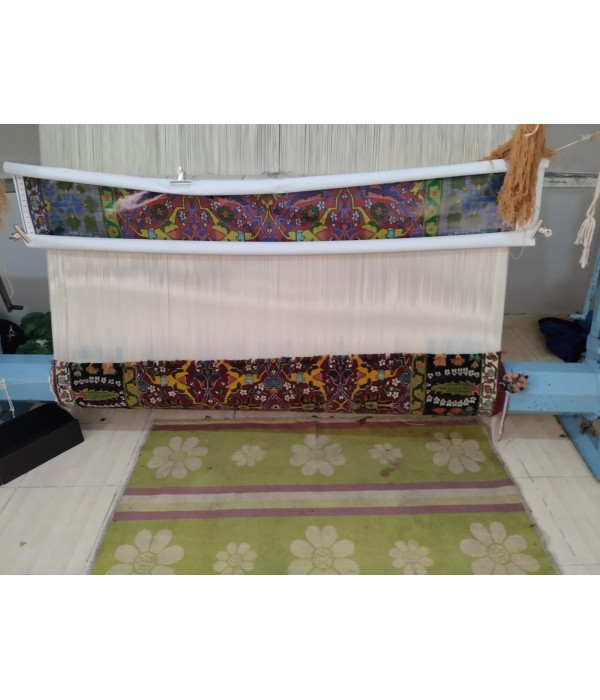
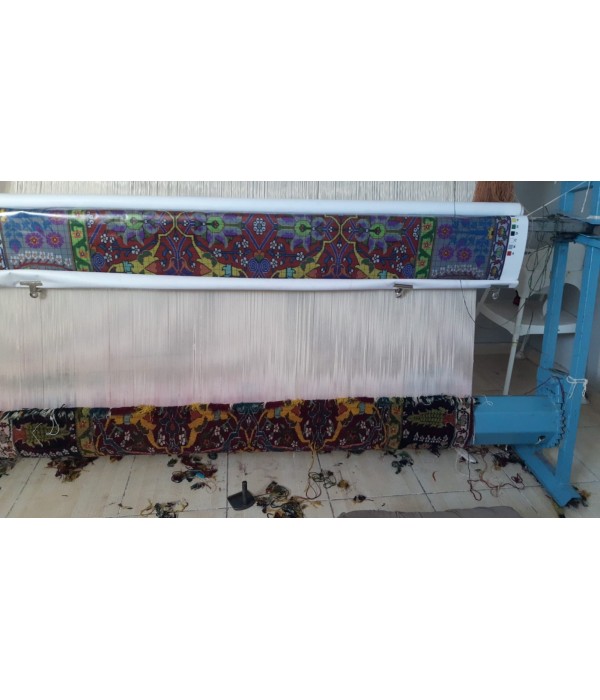
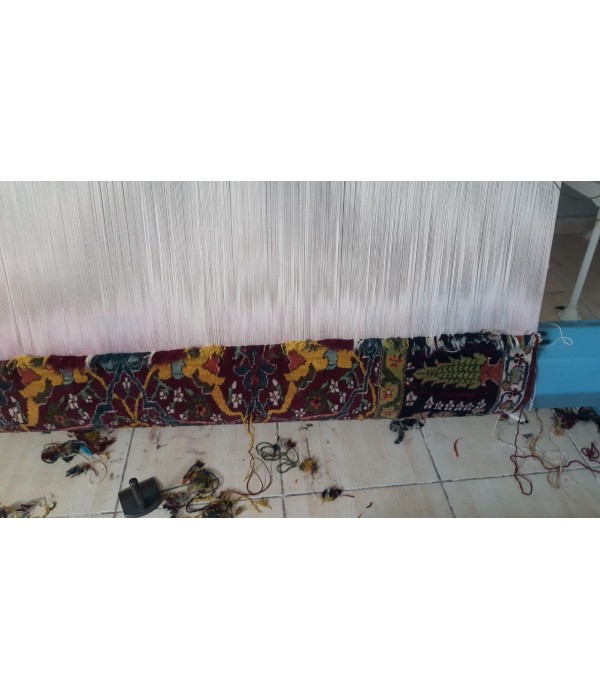
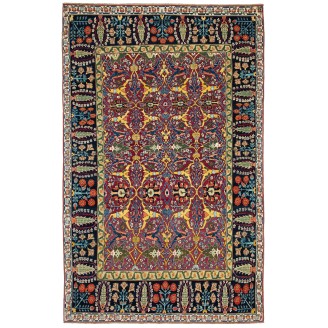
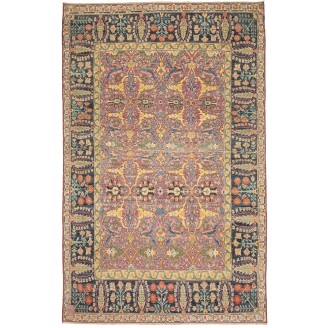
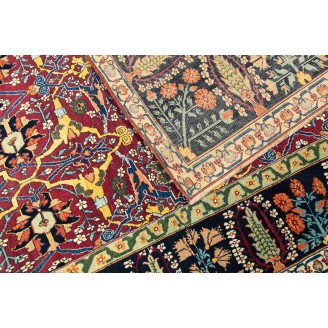
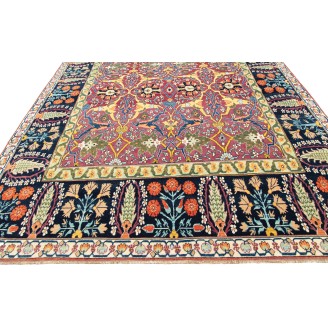
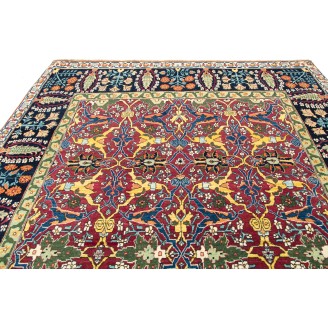
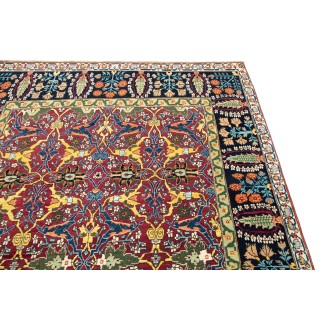
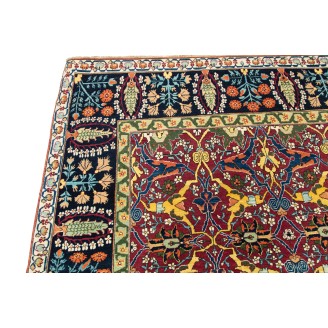
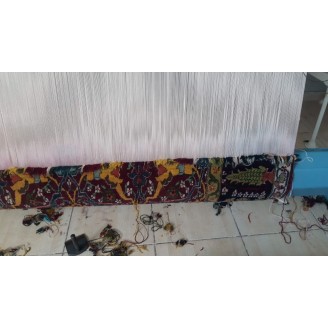
Kerman Vase Carpet – Arabesque Design Inspired by a 17th Century Safavid Masterpiece
Origin and Inspiration
This carpet is inspired by a rare and important group of Safavid textiles known as Kerman “vase carpets”, produced in Southeast Persia during the 17th century.
The source design is based on a historical example presented at Sotheby's Arts of the Islamic World / Lot 456 (April, 2011), attributed to the late 17th century. These carpets represent some of the most refined achievements of Persian weaving, characterized by their technical innovation and highly sophisticated ornamentation.
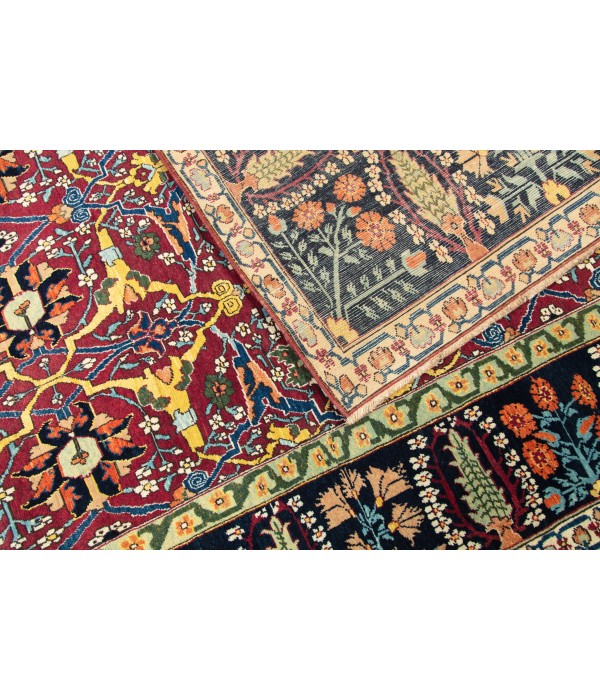
Vase carpets take their name from the distinctive “vase technique”, in which dense asymmetrical knotting is combined with multiple wefts, allowing for exceptional flexibility and fine drawing.
A Rare Survival of a Lost Tradition:
Very few Kerman arabesque carpets from the 16th and 17th centuries survive intact today. Many are known only through fragments, making complete compositions exceptionally rare and historically significant.
Materials and Craftsmanship
This piece reflects the refinement and technical ambition of classical Kerman weaving.
✔ Materials:
Pile: Hand-spun wool, naturally dyed
Foundation: Cotton warp with multiple weft structure, inspired by historical vase technique construction
✔ Weaving Technique:
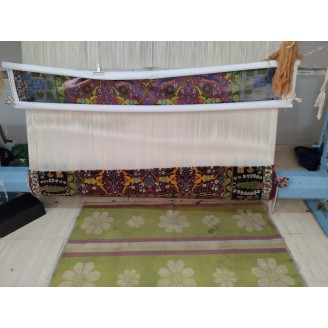
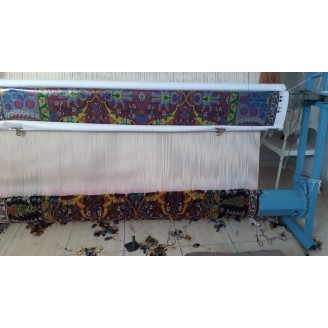
Hand-knotted using fine Persian knotting
Dense and flexible structure, allowing intricate pattern articulation
Low pile height to enhance clarity of the arabesque design
✔ Origin:
Handwoven following Persian workshop traditions
✔ Character:
Soft, fluid handle combined with precise detailing
Designed as both a collectible textile and a refined interior piece
Design and Pattern
The design is rooted in the classical language of Islamic arabesque, where geometry and vegetal ornament merge into a continuous, flowing system.
✔ Field Composition:
A highly structured yet fluid composition, without rigid centrality
The design unfolds organically across the surface, suggesting continuous expansion
✔ Arabesque Structure:
Interlacing scrolling vines and palmettes form the core visual rhythm
The pattern follows the principle of infinite repetition, a defining feature of Islamic ornament
✔ Motif Language:
Stylized leaves, tendrils, and floral elements intertwine in a complex network
The design balances precision with movement, creating a dynamic yet harmonious surface
✔ Vase Carpet Character :
Subtle vertical organization reflects the “vase” compositional system
The design may suggest upward growth, echoing the symbolic structure of life and abundance
✔ Borders:
Framed by complementary borders that echo the arabesque language of the field
The border acts as a visual containment for an otherwise infinite pattern
Color Palette and Dyes
The palette reflects the rich and mature chromatic language of Safavid Kerman carpets.
This rug boasts a harmonious blend of 11 natural colors, each derived from traditional dyeing methods: Natural Wool Color 320: Specially Washed Dark Brawn 316: No Dye - Sheep’s own Color Khaki 413: Dyers’s Weed Burlywood 135: Spurge - Madder Root Congo Pink 306: Madder Root Dark Salmon 310: Madders Root - Walnut Hulls Russian Green 418: Henna - Indigo Pale Green 439: Chamomile - Indigo Opal 533: Henna - Indigo Navy Blue 432: Indigo - Pomegranate Charleston Green 50: Spurge - Indigo
These tones work together to emphasize both the complexity and elegance of the arabesque composition.
Summary
This carpet is a refined reinterpretation of a late 17th-century Kerman vase carpet—one of the most sophisticated and technically accomplished forms within the Persian weaving tradition.
Drawing from a documented Sotheby’s example, it captures the essence of Safavid design: a seamless integration of structure, ornament, and material mastery.
Rather than merely reproducing a historical object, this piece revives a rare design language—where flowing arabesques, technical precision, and artistic vision come together in perfect balance.
It stands as both a decorative object and a cultural artifact, reflecting one of the highest moments of Persian textile art.
Dimensions:
5 ft 9 in x 9 ft 0 in ( 177cm x 275cm )