Mamluk Carpet with All-Over Leaf Lattice


Origin and Inspiration
This carpet is inspired by a rare Mamluk design preserved in the collection of the MAK – Museum of Applied Arts in Vienna, documented in the publication by Angela Völker Die orientalischen Knüpfteppiche.
Unlike traditional Mamluk carpets, which are defined by centralized medallion compositions, the source design for this piece originates from a border fragment—a repeating ornamental system traditionally used to frame a larger field.
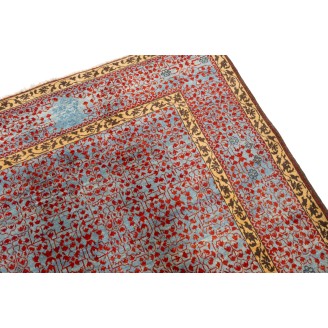
In this reinterpretation, that border motif is expanded into an all-over composition, transforming a secondary decorative element into the primary structure of the carpet.
A Transformation of Ornament into Structure:
By extending a border into the entire field, the design shifts from a framing device into an immersive visual language—creating a continuous, rhythmic surface that suggests infinity beyond the visible edges.
Materials and Craftsmanship
Woven using traditional techniques and carefully selected materials, this piece reflects a commitment to both historical accuracy and contemporary refinement.
✔ Materials:
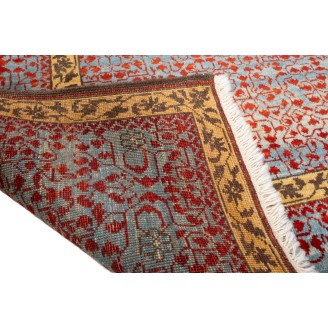
Pile: Hand-spun wool, naturally dyed for depth and authenticity
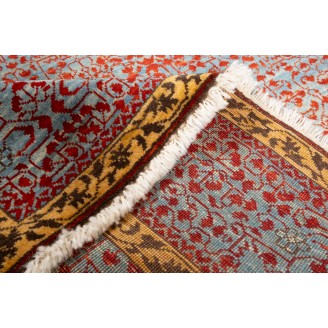
Foundation: Wool warp and weft, ensuring flexibility and durability
✔ Weaving Technique:
Hand-knotted using traditional Anatolian methods
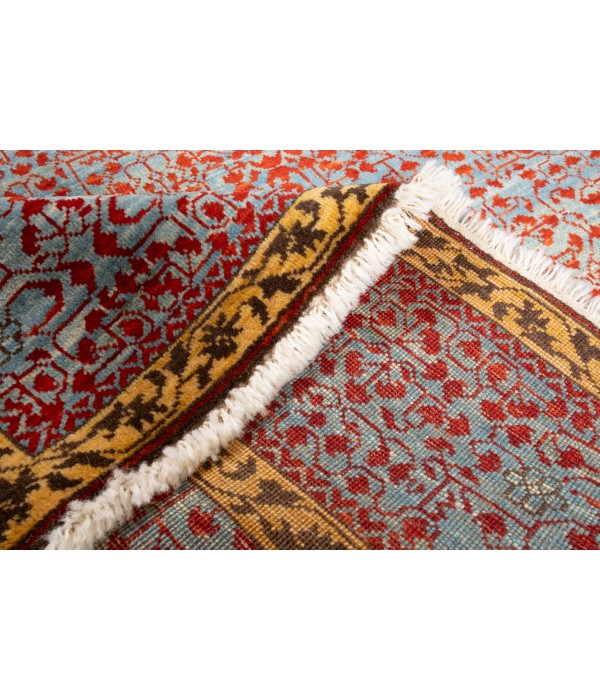
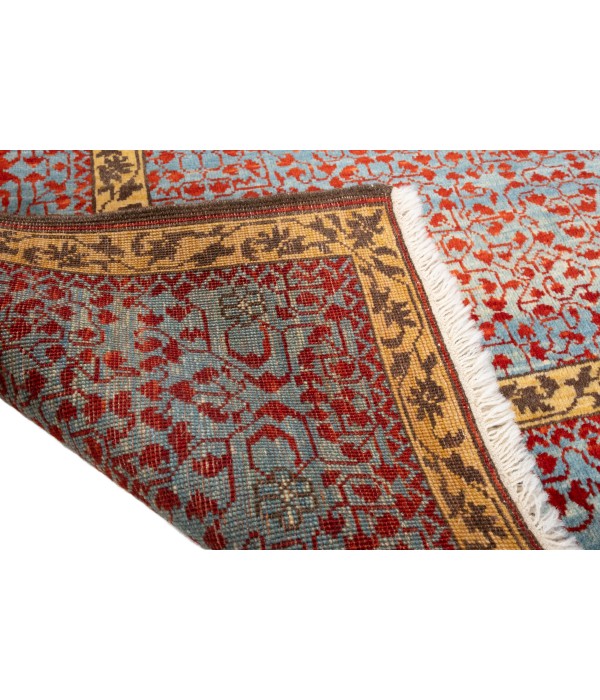
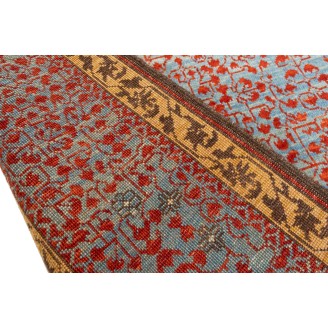
Fine knot density allows clarity within the repeating lattice structure
Low to medium pile, emphasizing precision of pattern
✔ Origin:
Handwoven in Anatolia, where historical weaving knowledge continues to be preserved
✔ Character:
Balanced, even surface with a refined tactile quality
Designed as both a functional textile and a collectible object
Design and Pattern
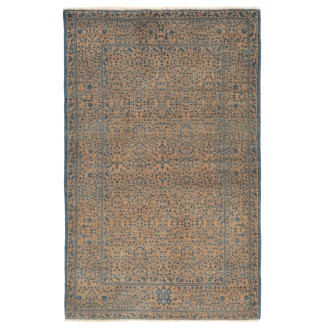
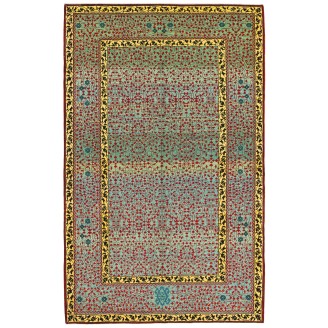
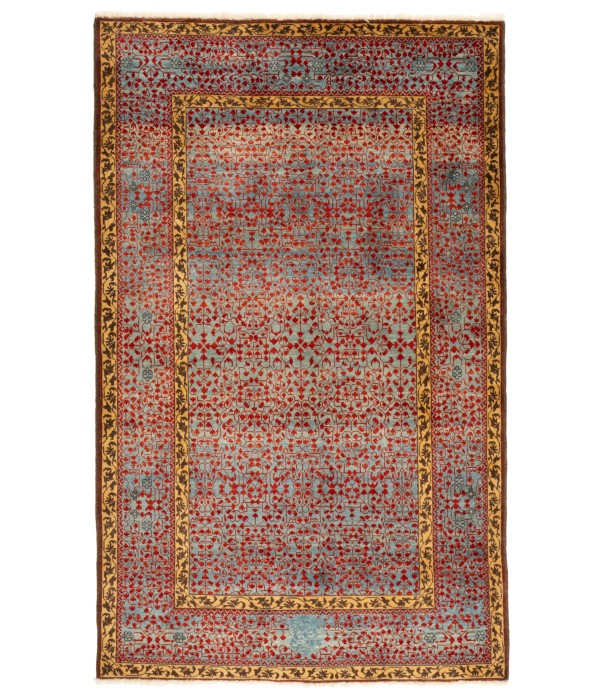
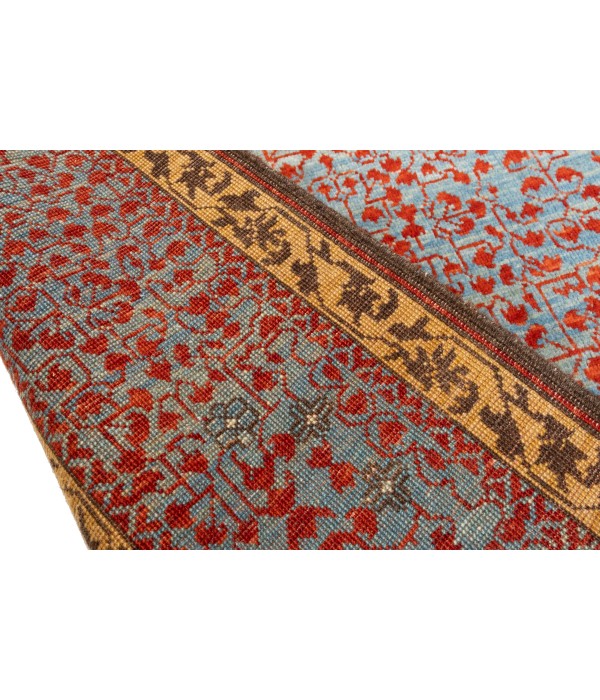
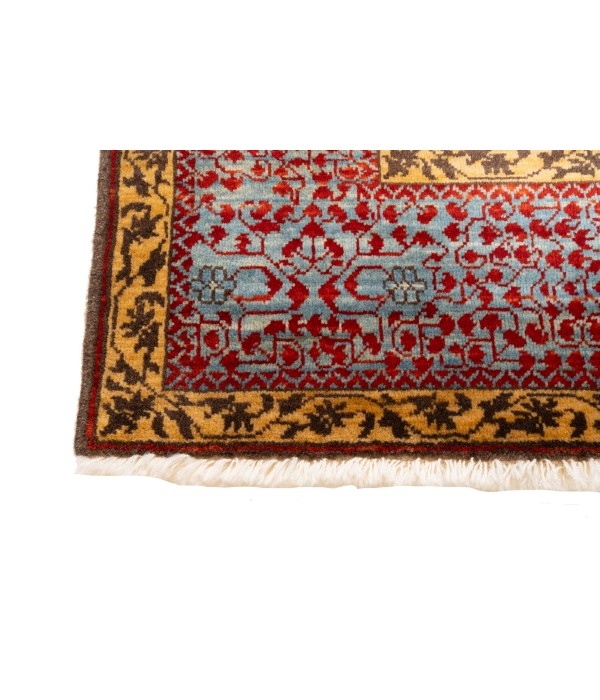
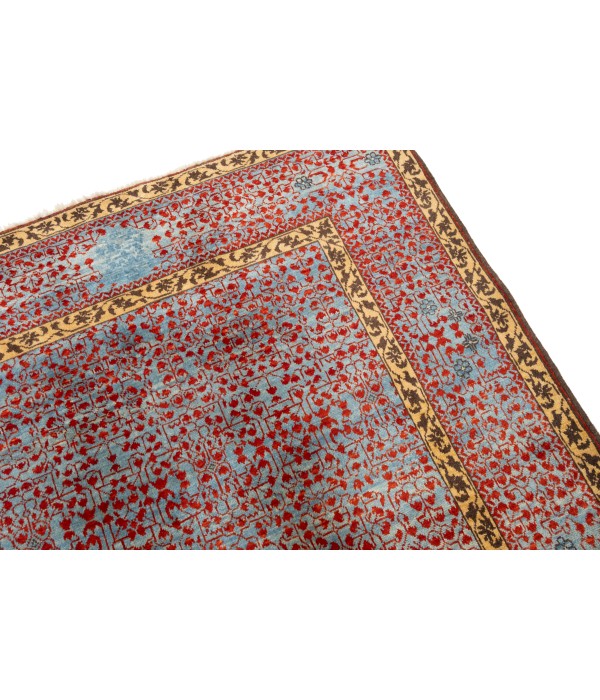
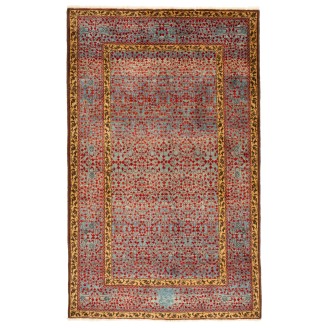
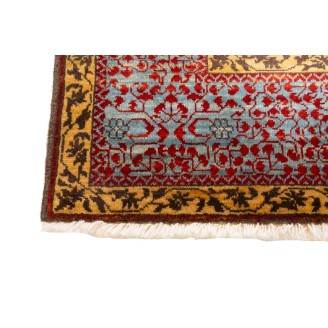
The defining feature of this carpet is its all-over leaf lattice composition, derived from a historical border design and reimagined as a complete field.
✔ Field Composition:
A continuous lattice structure extends across the entire surface
The pattern is based on a border motif, traditionally used as a framing element
Repetition creates a sense of rhythm and continuity, with no fixed center
✔ Motif Language:
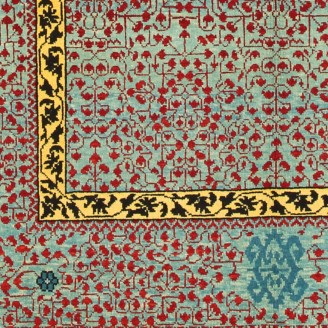
Stylized leaf and palmette forms are arranged within a geometric framework
The interplay between vegetal and geometric elements reflects the dual nature of Mamluk design
✔ Structural Concept:
The absence of a central medallion shifts the focus toward pattern as a system
The composition suggests an infinite extension, a key principle in Islamic art
✔ Borders:
Complementary guard borders frame the field subtly
The main visual emphasis remains on the expanded lattice structure
Color Palette and Dyes
This rug boasts a harmonious blend of 6 natural colors, each derived from traditional dyeing methods: Bistre Brown 411: Pomegranate - Madder Root Sunray Color 405: Henna Imperial Red 415: Madder Root Emerald Green 407: Chamomile - indigo Moss Green 27: Spurge - Indigo Cadet Blue 26: Spurge - Indigo
These colors are achieved through traditional natural dye processes, allowing the carpet to develop character over time.
Summary
This carpet represents a thoughtful reinterpretation of a historical Mamluk design—transforming a border motif into a complete and immersive composition.
Inspired by a documented example from the MAK Museum in Vienna, it reflects a deeper exploration of pattern, where ornament becomes structure and repetition becomes space.
Rather than replicating a traditional format, this piece reveals the underlying logic of design—offering a refined and contemporary expression rooted in historical sources.
It stands as both a decorative object and an intellectual composition, appealing to those who appreciate the subtlety and depth of textile design.
Dimensions:
4 ft 3 in x 6 ft 11 in ( 130cm x 211cm )