

Where Anatolia Meets Transylvania: A Visit to Brașov’s Black Church
A journey through Saxon history, Ottoman carpets, and the living responsibility of preservation
By Hakan Karar · August 2026
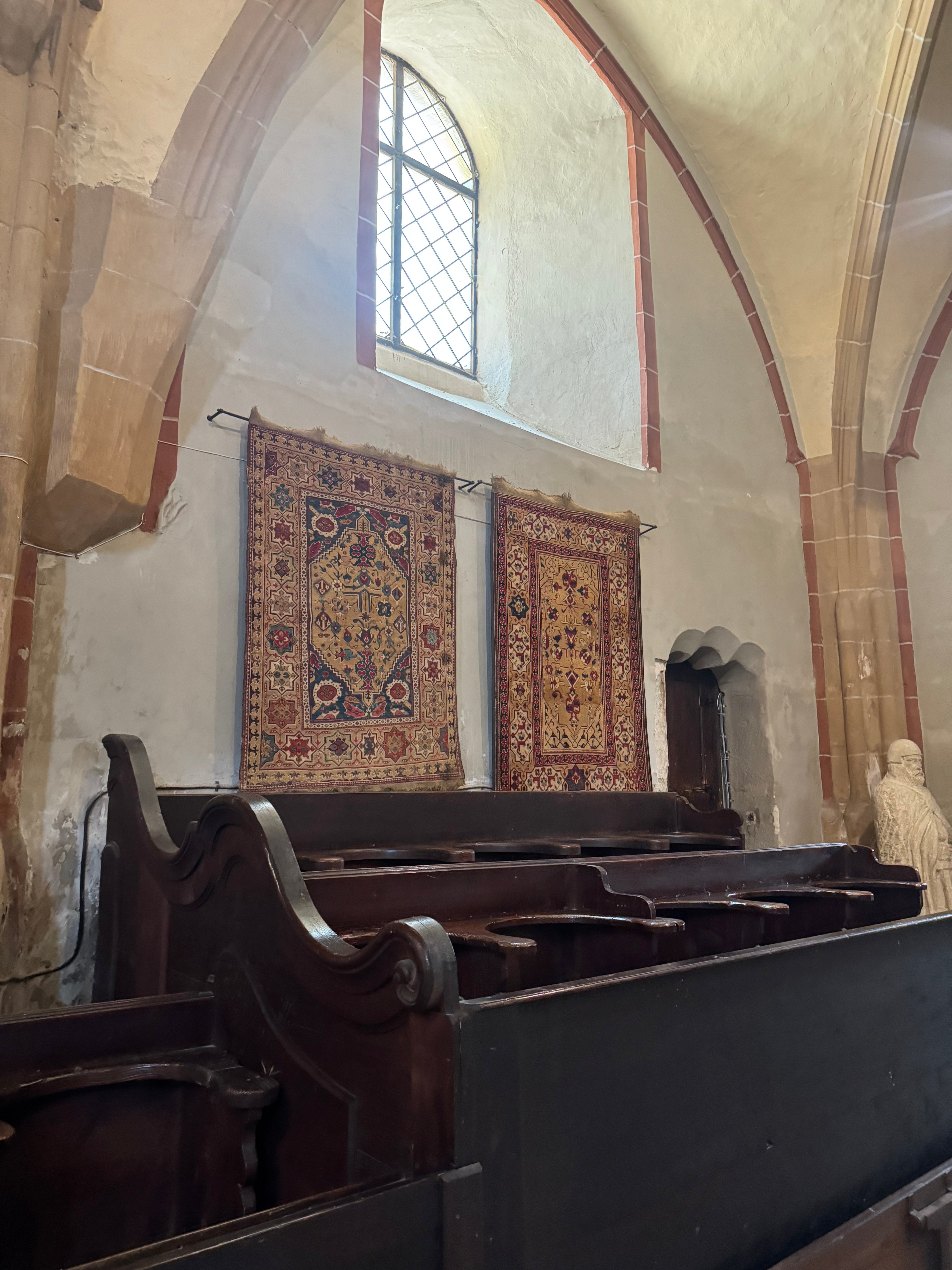
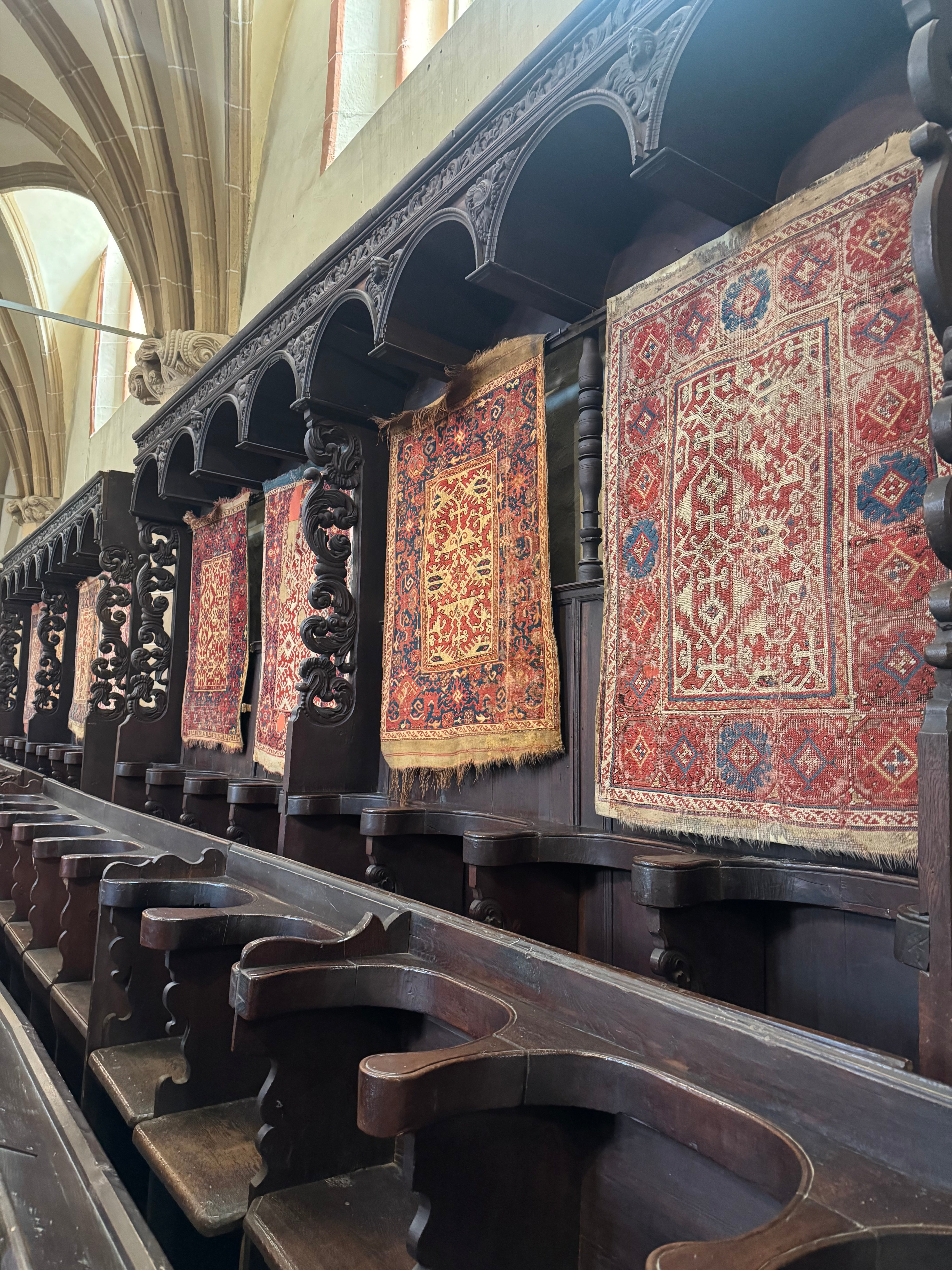
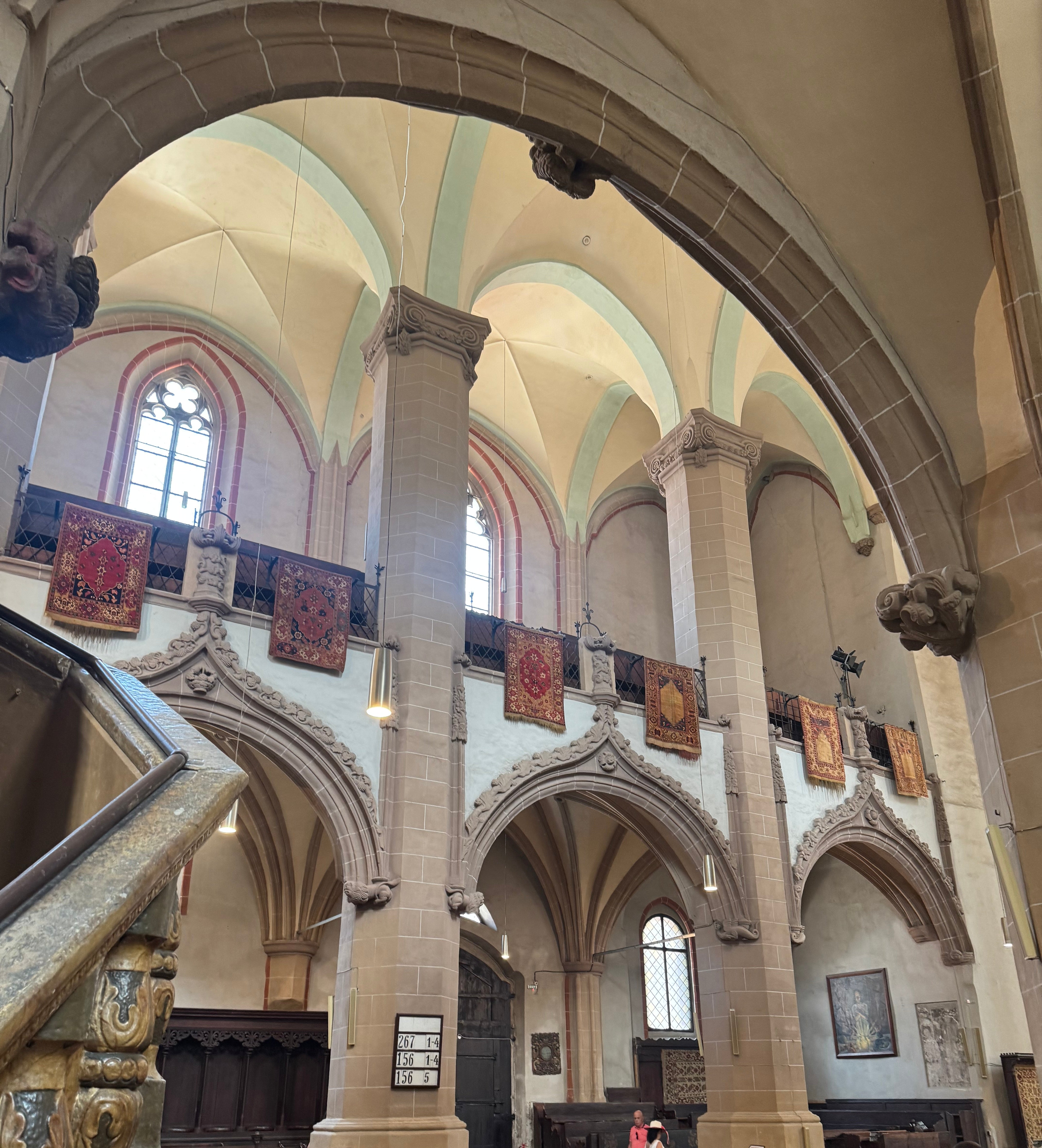
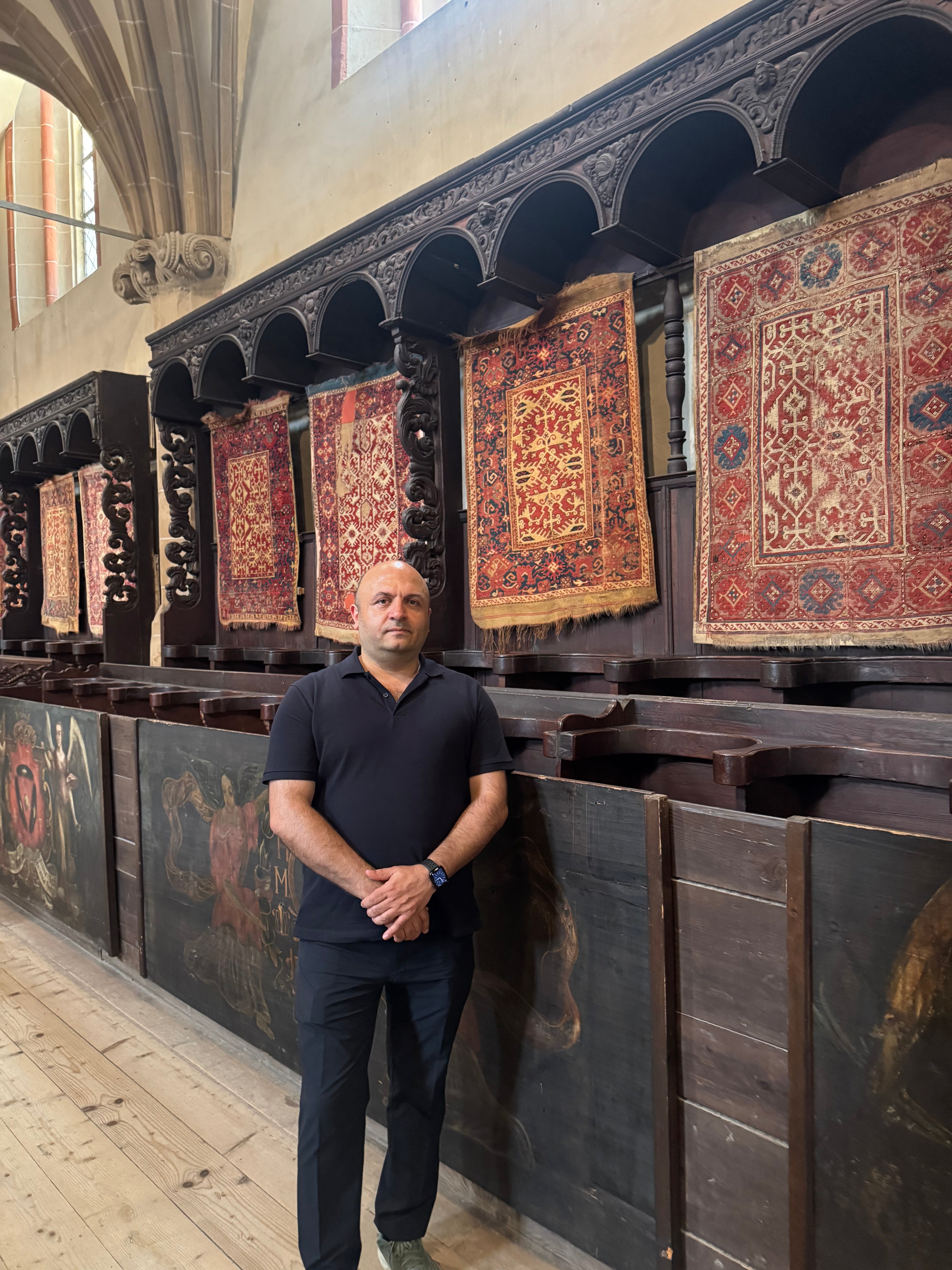
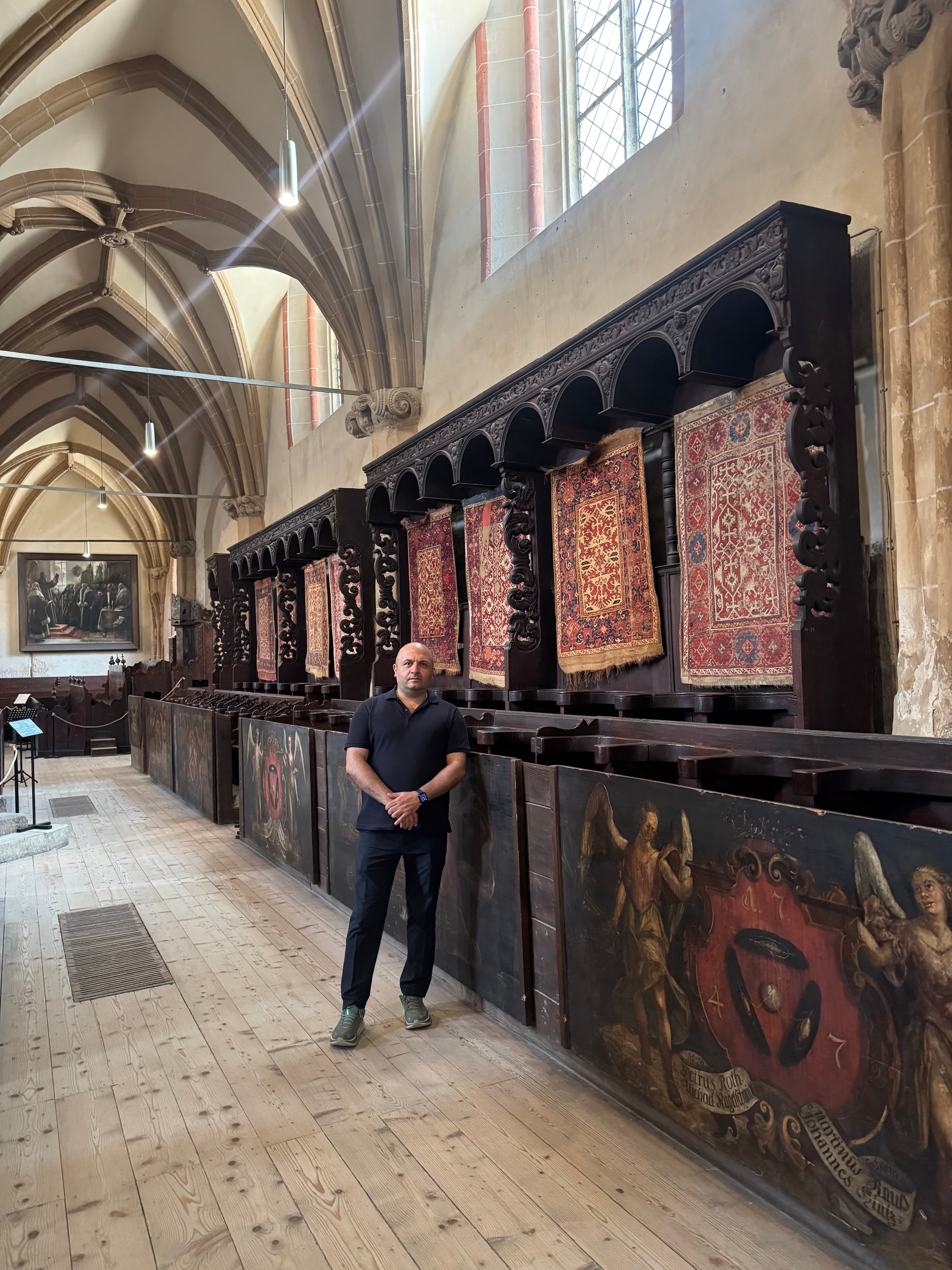
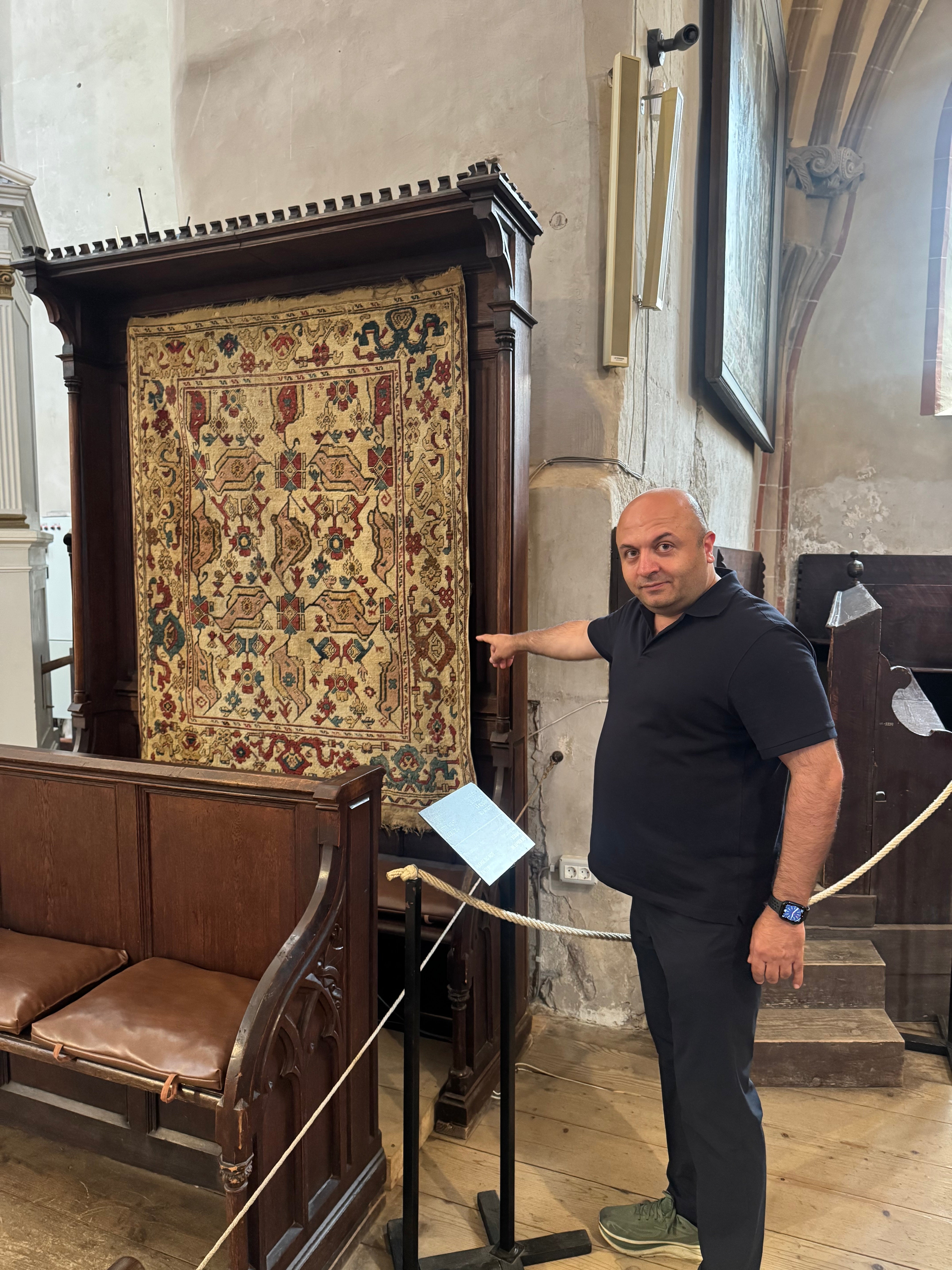
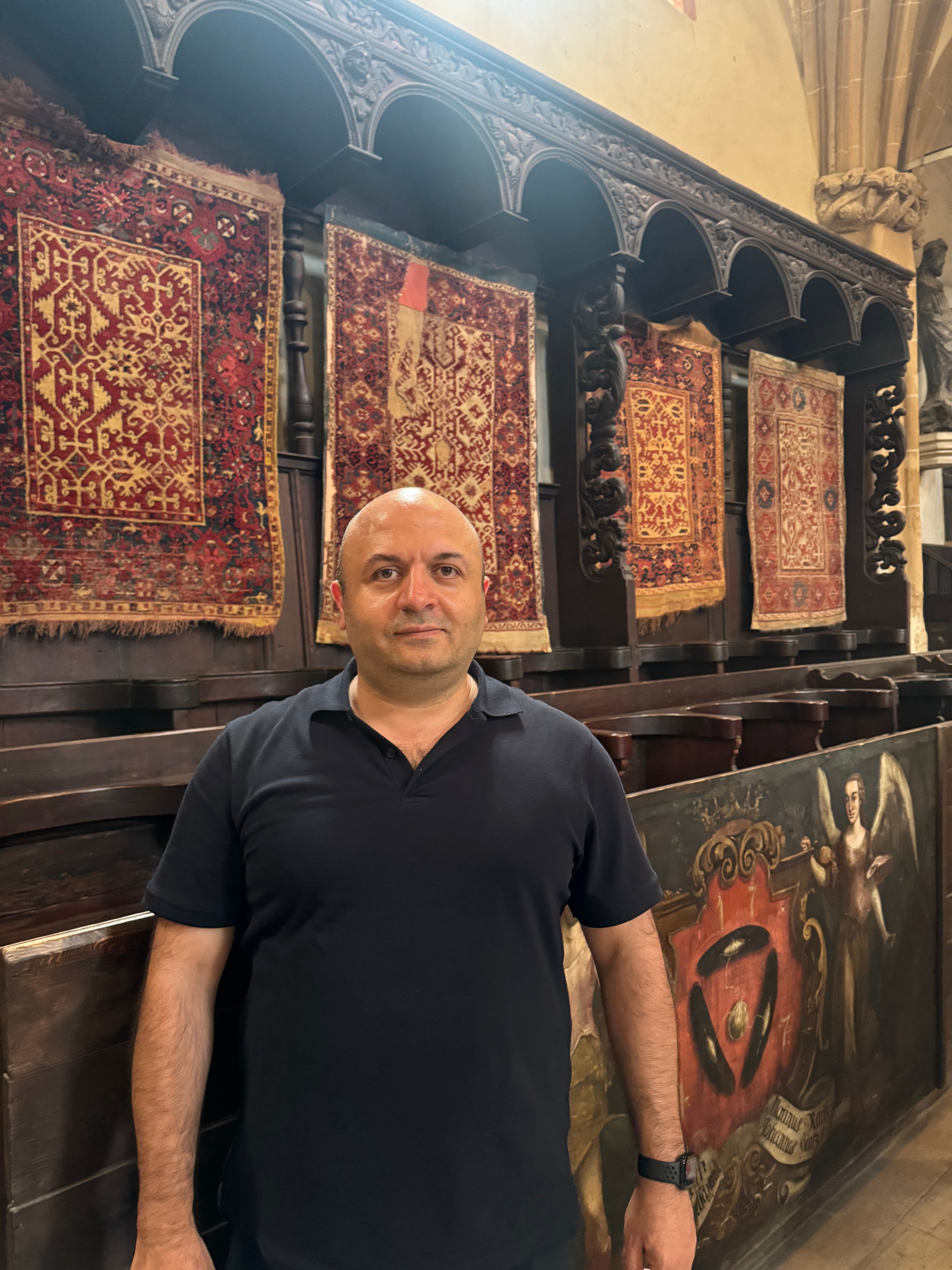
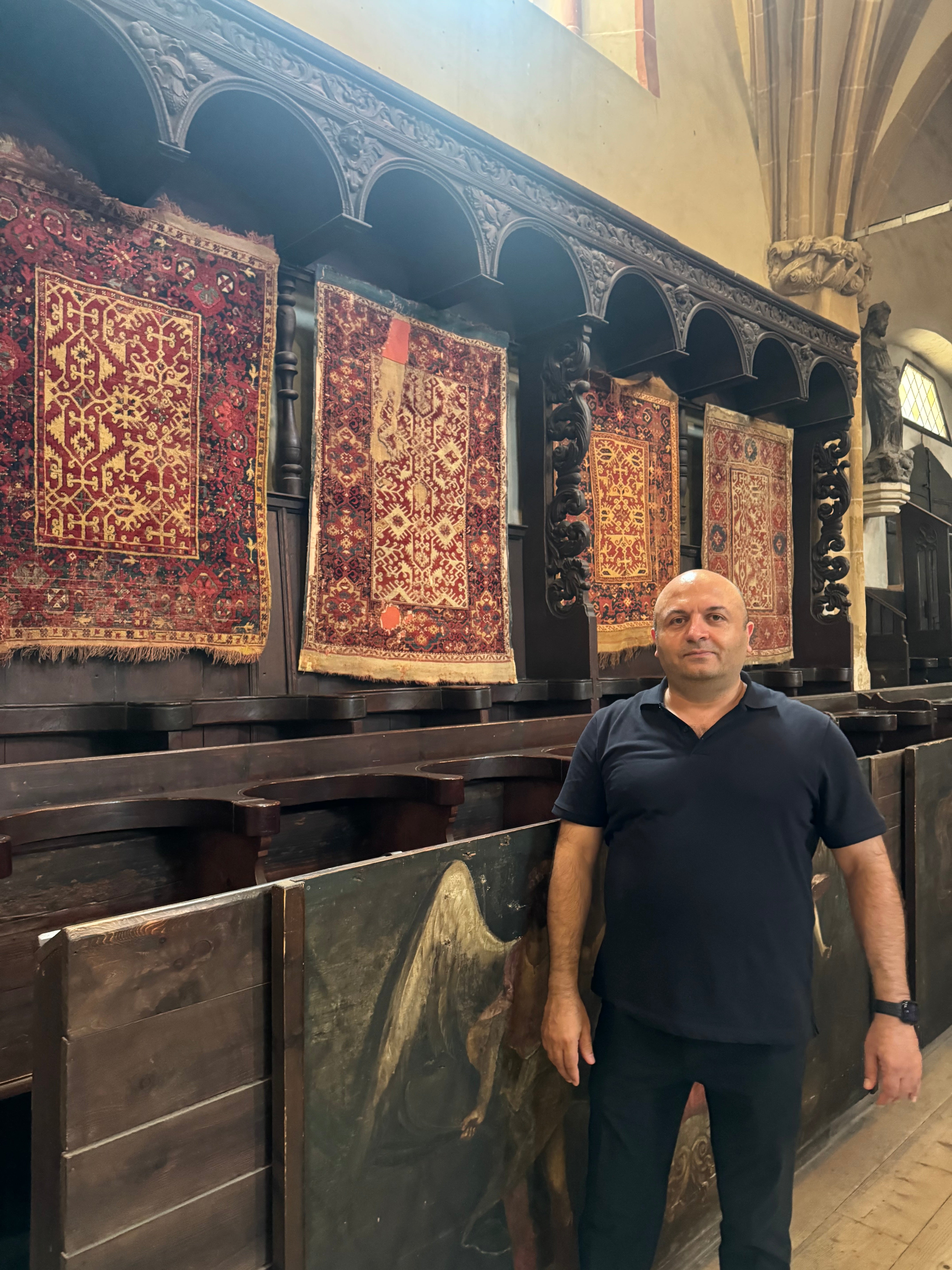
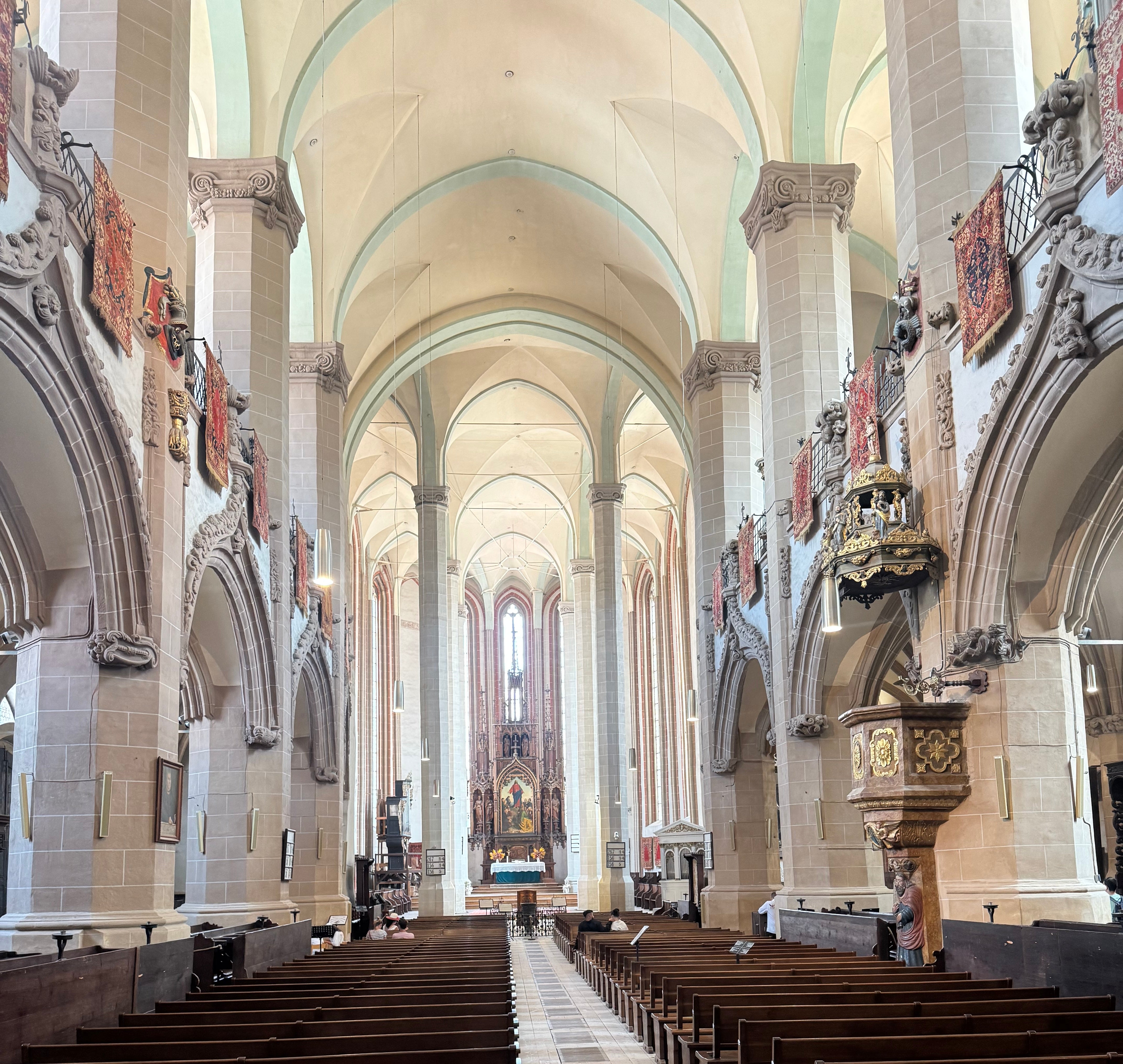
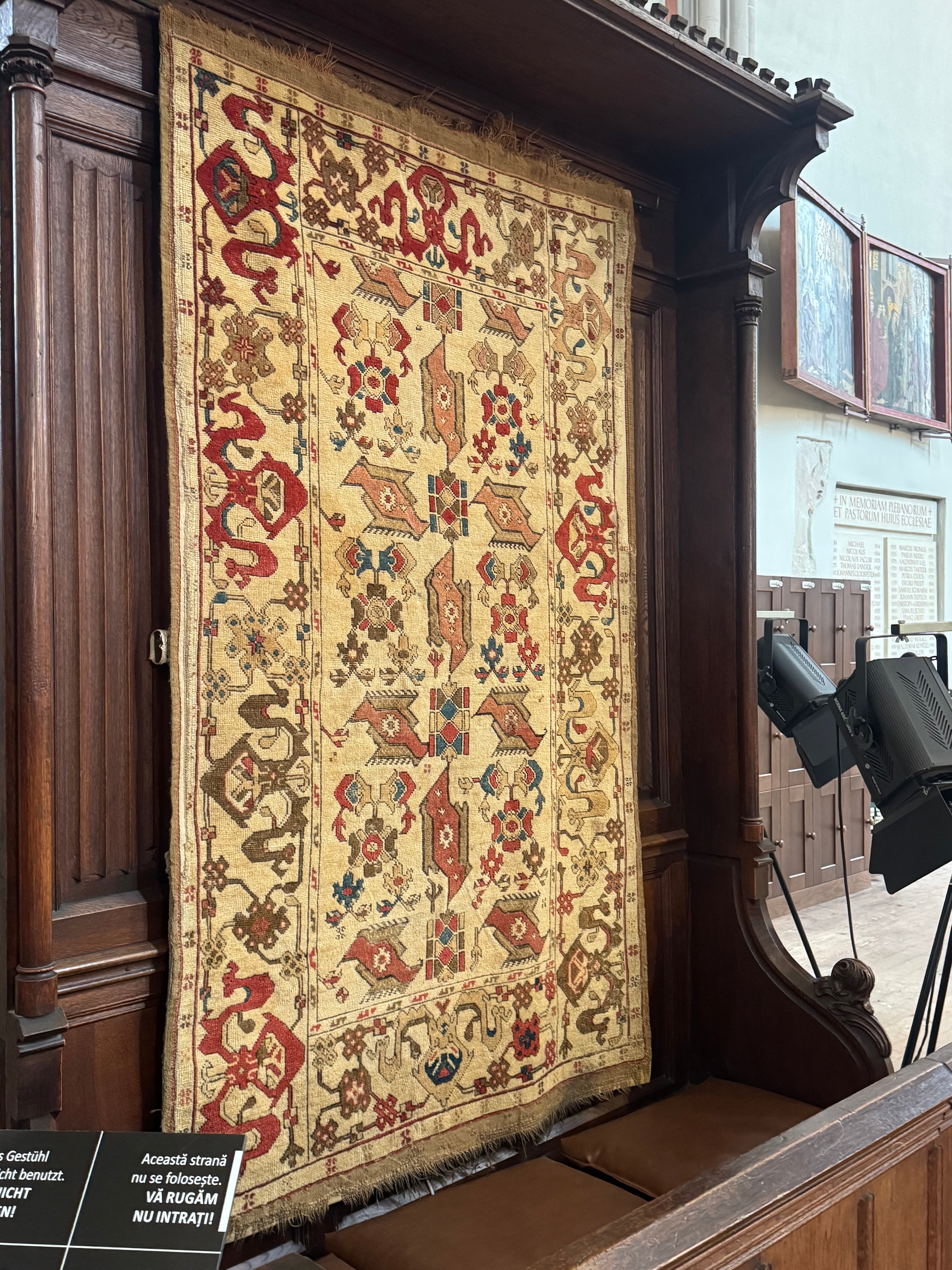
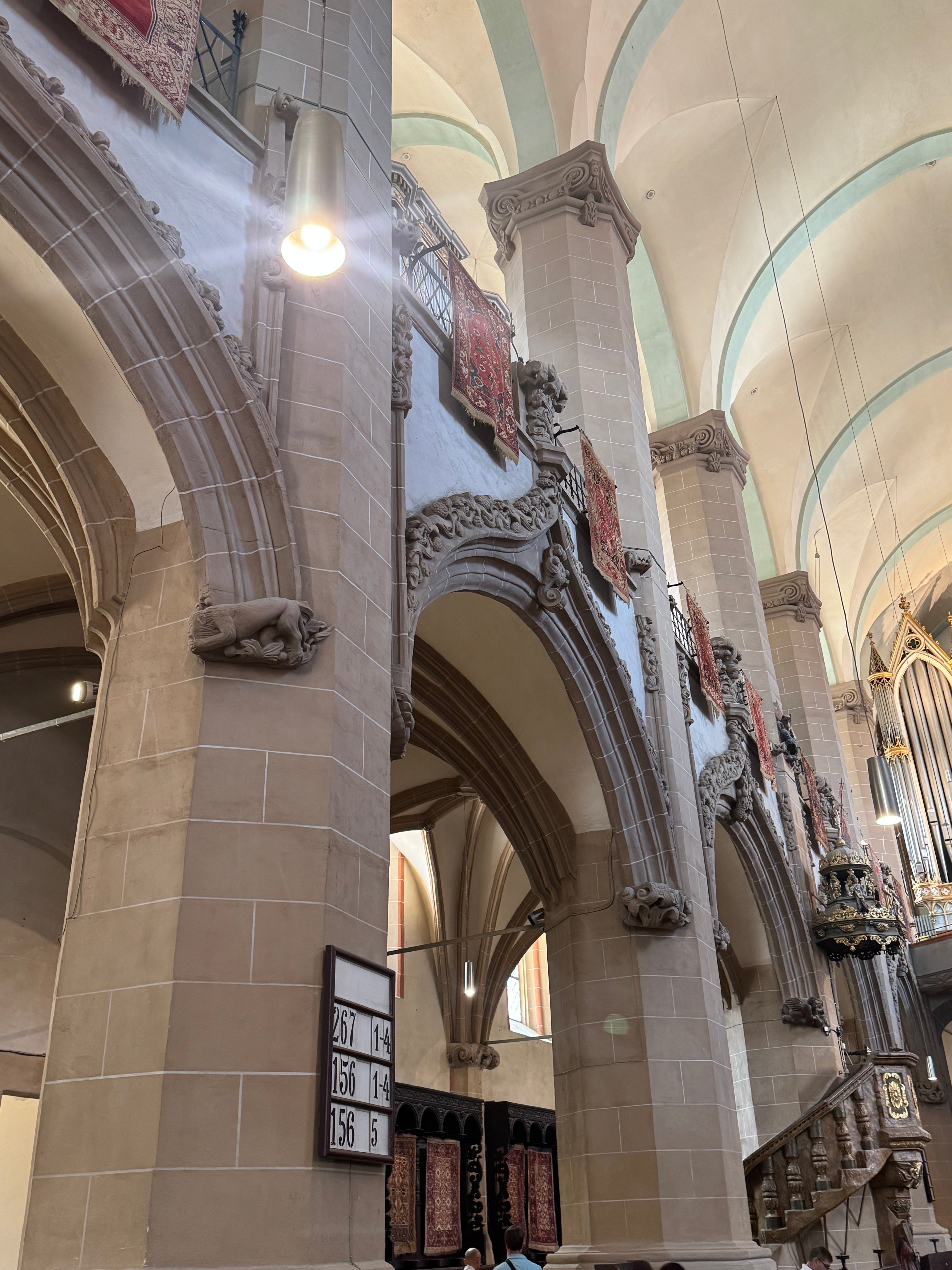
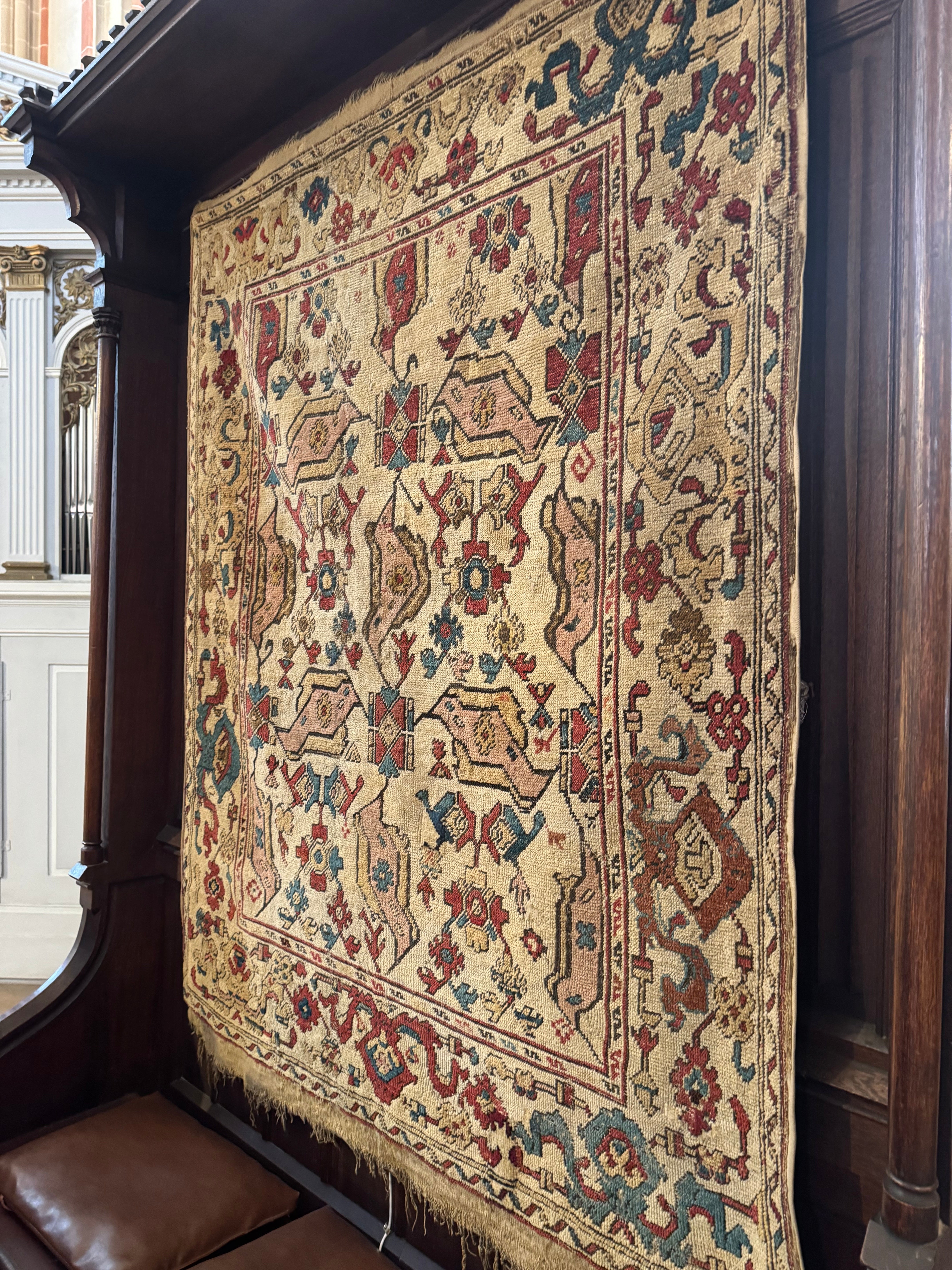
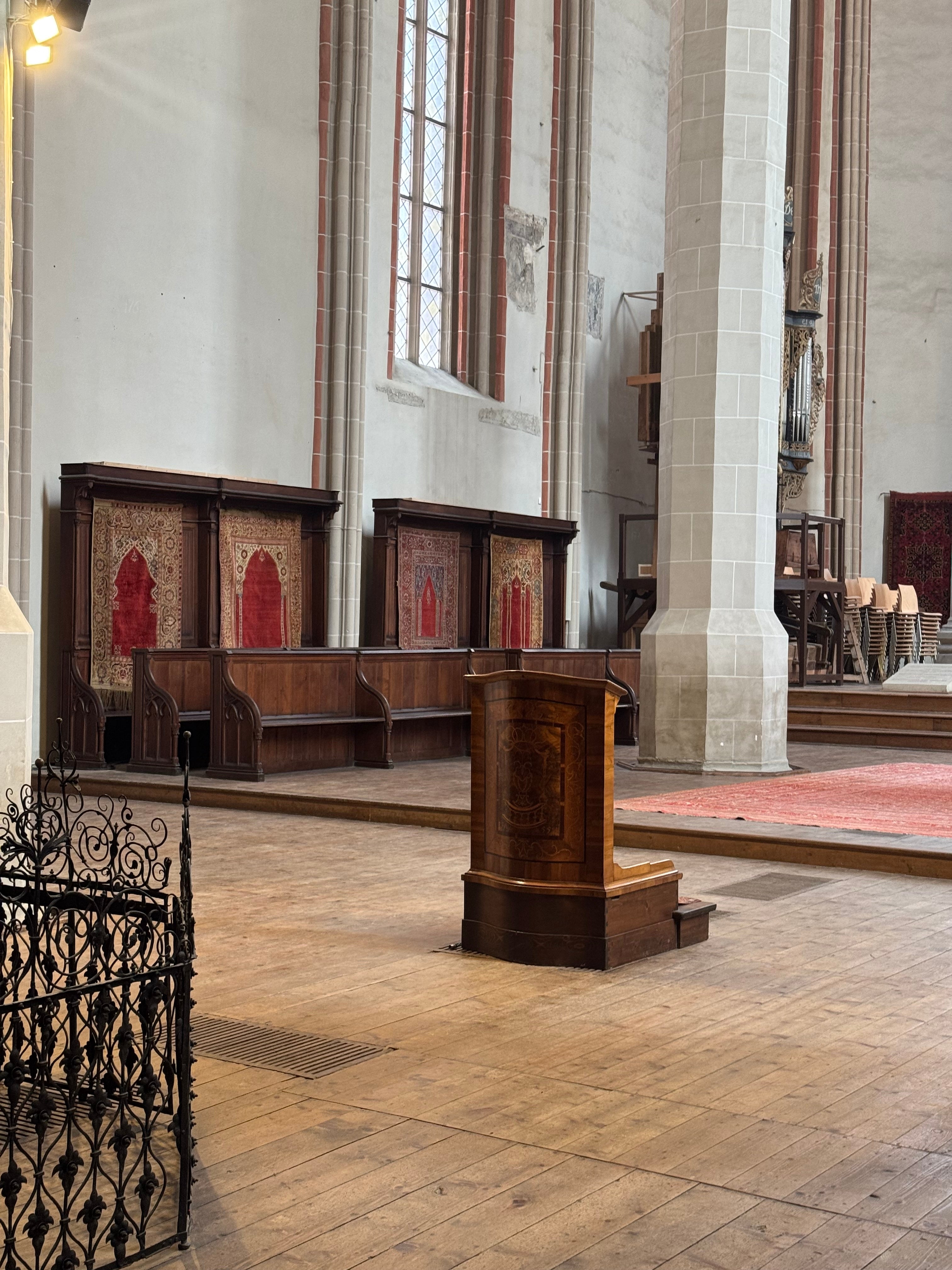
In August 2026, I travelled from Japan through Istanbul to Romania with a particular purpose: to see the Ottoman rugs preserved in the Black Church of Brașov. I had studied many of these carpets through books and photographs, but no image can fully explain what happens when they are seen in their historical setting—suspended against the pale walls of a vast Lutheran church, surrounded by Gothic stone, carved pews, and one of Romania’s great mechanical organs.
This was more than a visit to a collection. It was a journey into a place where Anatolian weaving, Saxon history, Ottoman commerce, Christian worship, and modern conservation have met for centuries.
For Ararat Rugs, such journeys are an essential part of our work. Historical rugs cannot be understood only as patterns to reproduce. We must also understand the people who made them, the routes they travelled, the spaces in which they were used, and the communities that protected them. The Black Church tells all of these stories at once.

The Saxons Who Shaped Brașov
The story begins with the Transylvanian Saxons. Despite their name, they did not all come from the region now known as Saxony. “Saxon” became a broad medieval term for the German-speaking settlers—many originating in areas along the Rhine and Moselle—who were invited by the kings of Hungary to settle in Transylvania from the twelfth century onward. Their privileges and regional autonomy were confirmed in the Andreanum, or Golden Charter, issued by King Andrew II in 1224. Eurac Research’s history of the charter explains both the settlers’ varied origins and the legal framework that shaped their communities.
They came as farmers, craftsmen, merchants, miners, and builders. In return for settling and defending this frontier region, their communities received important rights and privileges. They founded towns and villages across southern Transylvania and developed a distinctive urban and rural culture. Brașov, known in German as Kronstadt and in medieval Latin as Corona, became one of their most prosperous centres.
The geographical position of Brașov was crucial. Located near the Carpathian passes, it connected Central Europe with Wallachia and the Ottoman trading world beyond. Its wealth grew through crafts, guilds, and commerce. The city’s German, Hungarian, and Romanian communities also made it a place of cultural exchange. The Black Church’s account of Brașov’s German community traces its beginnings to the twelfth century and emphasizes the city’s development through trade, education, and reform.
The Saxon landscape extended far beyond Brașov. Fortified churches became the heart of many settlements: places of worship, community administration, food storage, and refuge during attack. Today, seven villages with fortified churches are listed by UNESCO, preserving a cultural landscape formed from the thirteenth to the sixteenth century. They remind us that the Saxon church was never simply a religious building. It was the physical centre of community life.
From Saint Mary’s Church to the Black Church
The church that dominates Brașov today was begun at the end of the fourteenth century. Built over nearly a hundred years, the great Gothic structure was conceived as a fitting expression of the town’s prosperity and faith. According to the church’s own historical account, commercial and craft connections with Nuremberg influenced its design, and Saint Sebaldus Church there served as an architectural model.
Originally a Roman Catholic church dedicated to the Virgin Mary, it became one of the most important centres of the Reformation in Transylvania. The humanist Johannes Honterus—printer, educator, cartographer, and reformer—played a decisive role in bringing Lutheran ideas to Brașov and the wider Saxon world. In October 1542, the church hosted the first Lutheran service in Transylvania. Honterus’s Book of Reformation then helped establish the new faith among the Saxon communities.
A catastrophic fire swept through Brașov in April 1689. The church’s enormous roof burned and collapsed, and much of the interior was badly damaged. Tradition associated the building’s darkened appearance with the fire, although the familiar name “Black Church” came into general use later. Reconstruction began quickly but continued for almost a century, supported by the whole community. New furnishings, pews, galleries, an altar, and an organ gradually transformed the interior. The official history of the Black Church presents the building not as a monument frozen in one period, but as the result of repeated rebuilding, donation, and collective care.
Today the Black Church remains a working Lutheran church and the spiritual centre of Brașov’s Saxon community. It is also a concert venue, archive, museum, and custodian of objects gathered across more than six centuries. Among these, its Ottoman carpets are perhaps the most unexpected and internationally important.

Sitting quietly in the old wooden pews and looking up at these rugs was an amazing and deeply moving experience. For a moment, the distance between the Anatolian weavers who created them and the Saxon community that protected them seemed to disappear. Seeing the carpets still alive in the place that has cared for them over centuries gave us renewed energy and motivation to continue what we do at Ararat Rugs—to preserve this knowledge, work with respect for the past, and carry the tradition forward.
How Ottoman Carpets Entered Lutheran Churches
The rugs now commonly called “Transylvanian” were not woven in Transylvania. They are Ottoman-period Anatolian carpets that acquired their modern name because so many were preserved in Transylvanian churches.
Brașov stood on one of the great commercial routes between East and West. Ottoman textiles—including carpets, blankets, garments, and other luxury goods—passed through its markets in significant quantities. A Brașov customs register records that 500 carpets passed through the city in 1503 alone. These rugs were valuable objects, symbols of status, and important gifts.
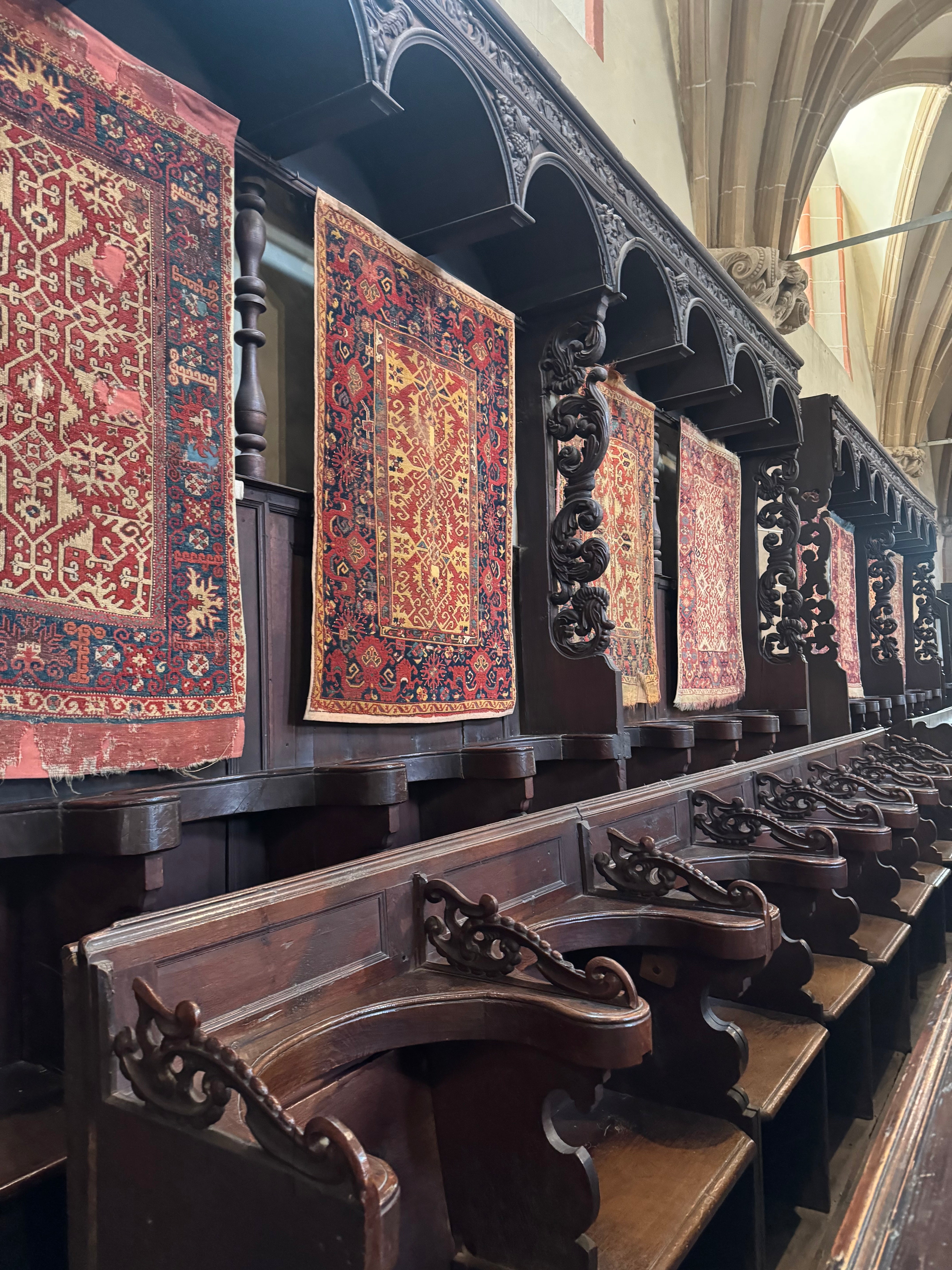
Wealthy merchants, guilds, and townspeople bought Anatolian carpets and later donated them to their churches. They decorated walls, pew fronts, galleries, pulpits, and, on special occasions, spaces connected with weddings, baptisms, funerals, and the seating of guild members. Their warm colours and intricate surfaces also brought richness to interiors that had become visually restrained after the Lutheran Reformation.
This is one of the most remarkable aspects of the story. Carpets originating in a Muslim society—some using the directional format associated with prayer rugs—were valued and protected within Christian churches. They were not preserved because cultural differences disappeared, but because beauty, craftsmanship, prestige, and devotion allowed an object to gain new meaning in another community.
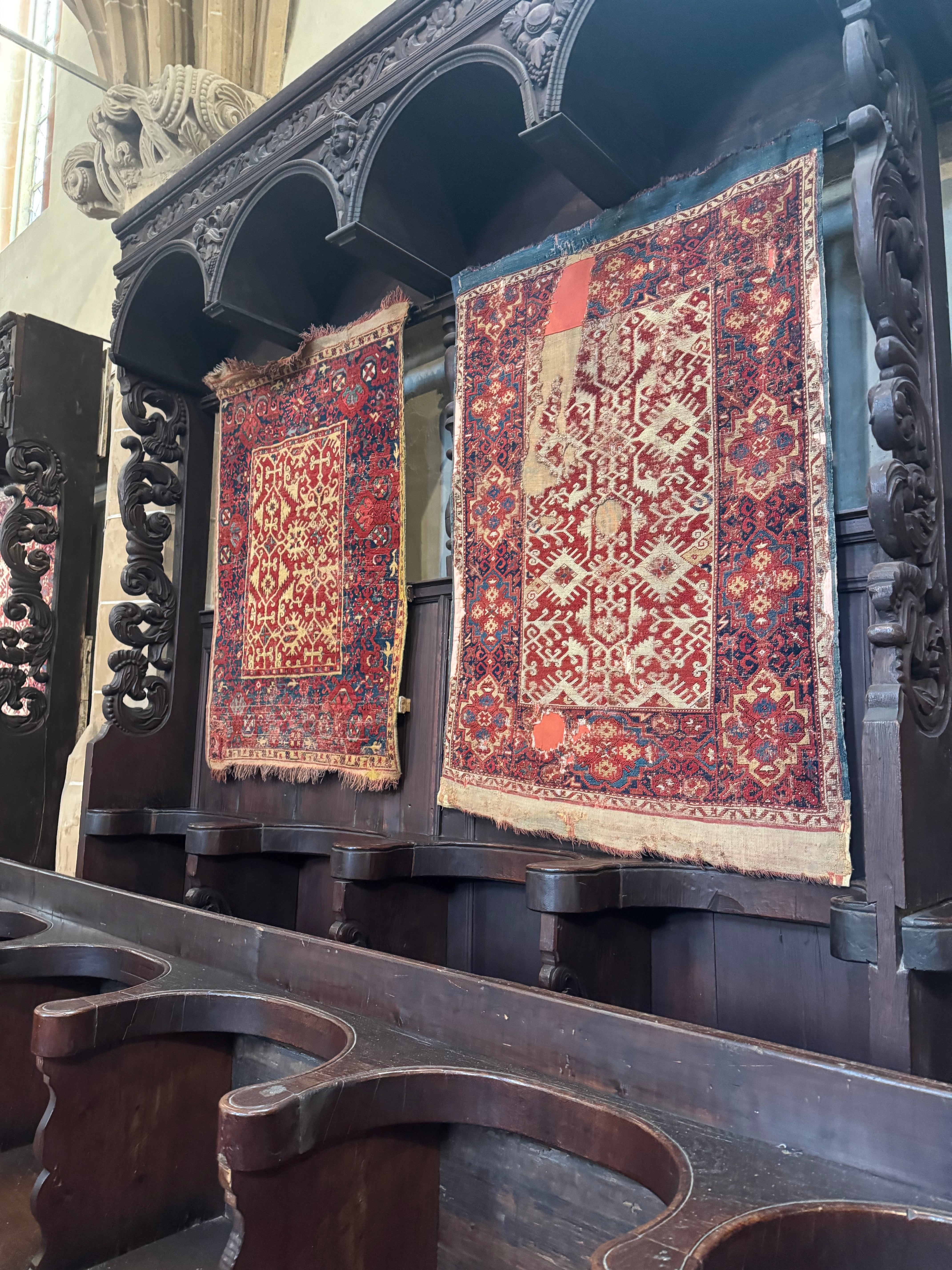
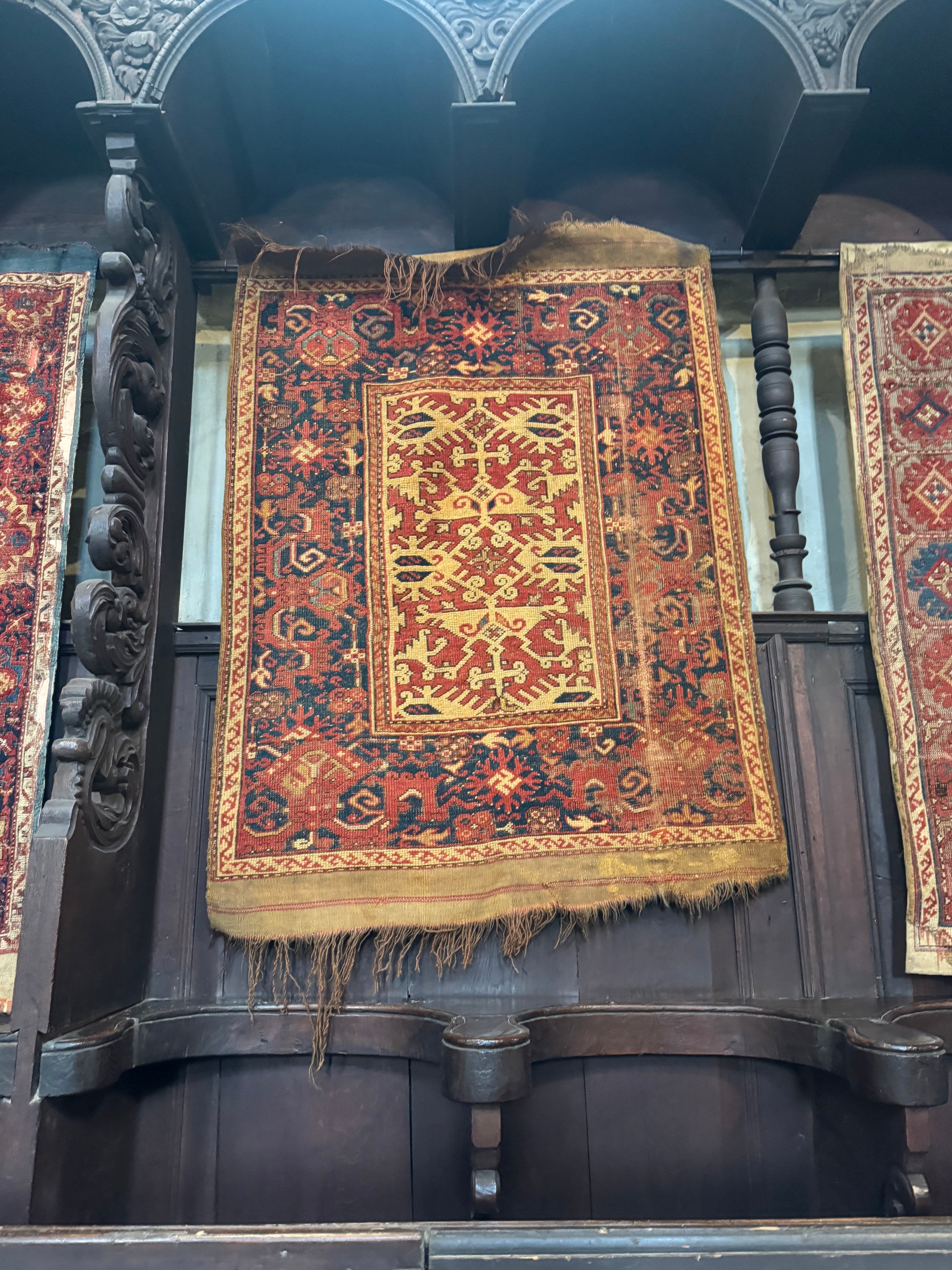
The surviving groups include Holbein, Lotto, Ushak, white-ground Selendi, and the single- and double-niche carpets more specifically known as “Transylvanian” rugs. Their names often come from European painters who depicted related carpets, from design types, or from the places where they survived rather than from the exact workshops where they were woven.

The Accident—and Discipline—of Survival
Textiles are among the most fragile forms of cultural heritage. Wool is worn down by footsteps, damaged by insects, weakened by light, and vulnerable to dampness, fire, dirt, and careless repair. Countless early Anatolian rugs disappeared through ordinary use.
In Transylvania, however, the carpets were often hung, draped over pews, or stored and brought out for special occasions instead of being continuously walked upon. Once donated to a church, they were also removed from the normal cycle of private sale and household replacement. This combination of changed function and communal ownership gave them an unusual chance of survival.
The Black Church now cares for a collection of around two hundred Ottoman textiles and rugs. It also safeguards carpets transferred from smaller Protestant parishes that could no longer maintain them. After much of the Saxon population emigrated during the twentieth century—especially around the end of the communist period—the church increasingly became a refuge for objects left behind by shrinking communities. The church describes this continuing responsibility in its work of preserving Saxon and Ottoman heritage.
Preservation here does not mean making every object appear new. The church’s conservation philosophy recognizes that wax marks, ink inscriptions, old repairs, missing pile, and other signs of use can be part of an object’s history. Its conservators intervene to slow deterioration while retaining as much original material and historical evidence as possible. Textile-restoration work established in Brașov in the 1970s helped save hundreds of objects from across Transylvania. This approach is described in the Black Church’s account of its heritage and conservation practice.
That philosophy left a strong impression on me. A rug’s value is not limited to the day it leaves the loom, nor to its market price. Its life continues through use, care, repair, memory, and the meanings given to it by different generations.
Stefano Ionescu and the Rediscovery of the Rugs
Any serious study of this subject must acknowledge the work of Stefano Ionescu. An independent scholar born in Romania and based in Rome, Ionescu has devoted decades to documenting and defending the Ottoman carpet heritage of Transylvania.
The revised second edition of Antique Ottoman Rugs in Transylvania was published in 2007. Edited by Ionescu, with texts by Alberto Boralevi, Stefano Ionescu, and Andrei Kertész, it presented the famous Black Church collection in its entirety for the first time and documented nearly 300 Turkish rugs with colour images and technical analysis. The book also examined Transylvania’s history, the Ottoman carpet trade, church and museum collections, inscriptions, rug structures, and the reasons these textiles survived. It remains a fundamental reference for collectors, historians, and anyone seeking to understand why “Transylvanian” is a history of preservation, not a claim of origin. Details of the publication are available through Stefano Ionescu’s Transylvanian Rugs project.
Ionescu’s work has helped move these rugs from relative obscurity into international scholarship. It has also encouraged practical conservation and the making of carefully researched replicas using hand-carded and hand-spun wool, natural dyes, and traditional techniques. The purpose is not to replace the historical value of an original, but to reduce the need to expose fragile rugs while keeping knowledge of their construction alive. His documentation of the Black Church collection and his work with traditional reproduction are also noted by the Dar al-Athar al-Islamiyyah archive.
Why These Rugs Matter Now
The importance of preserving these rugs reaches far beyond the carpet world.
First, they are material records of early Anatolian weaving. Their wool, dyes, knotting, structure, proportions, and design variations preserve information that written documents cannot fully provide. When historical examples disappear, a part of the technical vocabulary of weaving disappears with them.
Second, they are evidence of cultural exchange. It is easy to describe history only through borders, wars, and opposing religions. These rugs tell another story: objects made by Anatolian Muslim weavers travelled through Ottoman and European trade networks, were acquired by Saxon merchants, entered Lutheran churches, and were cared for there for centuries. They show that cultural contact is not an abstract modern ideal. It has been woven into daily life for a very long time.
Third, their preservation teaches responsibility. The Saxon communities did not create these carpets, yet they became their guardians. Today, as those communities have grown smaller, the responsibility has passed to conservators, clergy, scholars, public institutions, and visitors from many countries. Heritage survives when one generation accepts care for something it did not make and may not fully own in a cultural sense.
Finally, the rugs remind us that age and imperfection are forms of knowledge. A worn area can reveal how an object was displayed. An inscription can preserve the name of a donor. A repair can show how earlier owners understood value. Conservation must protect the integrity of an object without erasing the evidence of its life.
The Connection to Ararat Rugs
This is where the visit connects directly with the work of Ararat Rugs.
We stay true to the values and weaving methods of the past, working with hand-spun wool, natural dyes, and time-honoured techniques. Yet tradition is not preserved by repeating an old pattern without understanding it. It survives when knowledge passes from historical objects to present-day hands—and when new rugs are made with the same seriousness toward material, colour, proportion, and craft.
Seeing the Black Church carpets in person changes the way one looks at design. A motif is no longer a flat image. It has scale, rhythm, texture, abrash, and the small variations created by the weaver’s hand. The colours respond to the architecture and to one another. Repairs and wear become part of the composition. Most importantly, the rugs reveal how an Anatolian object can take on a long life far from its place of origin without losing its identity.

This visit will inform our continuing research and future production at Ararat Rugs. The aim is not simply to make copies. It is to study the principles that gave the originals their strength: disciplined geometry, natural colour, excellent wool, durable structure, and the freedom of the human hand within an inherited design language. This approach reflects Ararat Rugs’ commitment to historic weaving methods and to carrying Anatolian craftsmanship into the future.
A Living Bridge
Standing in the Black Church, I felt that the carpets did not belong to only one history. They were Anatolian and Ottoman by origin, Saxon and Transylvanian through preservation, and universal through the human capacity to recognize and care for beauty.
The Black Church is therefore more than the setting of an extraordinary rug collection. It is a living bridge between Anatolia and Europe, Islam and Christianity, commerce and devotion, private ownership and communal responsibility, past craftsmanship and future making.
The survival of these rugs was not inevitable. It was the result of trade, donation, adaptation, scholarship, and centuries of care. Our responsibility now is to study them honestly, preserve them carefully, and allow the knowledge held within them to inspire another generation of weavers and viewers.
That is why the journey to Brașov mattered—and why the Ottoman rugs of the Black Church continue to speak so powerfully in our own time.
Research Journey · August 2026
Scenes from the Black Church and Transylvania
A photographic record of our visit to Brașov and our encounter with the Ottoman Anatolian rugs preserved in Transylvania.
Select any photograph to view it at full size.